Tel: +86-183-6396-1712 E-mail: bruce@luckywaycn.com
English



| Quantity: | |
|---|---|
Removable Gooseneck Lowbed Semi Trailer is specialized designed for the most massive equipment in mining, energy, and large-scale infrastructure projects. With four axles providing superior load distribution, these trailers typically handle payloads ranging from 80 to 120 tons or more.


Loading Capacity | 80-120 tons |
Axle | 3/4/5 pcs Fuwa/BPW/Saf |
Tire | 12/16/20 units |
Material | Carbon steel |
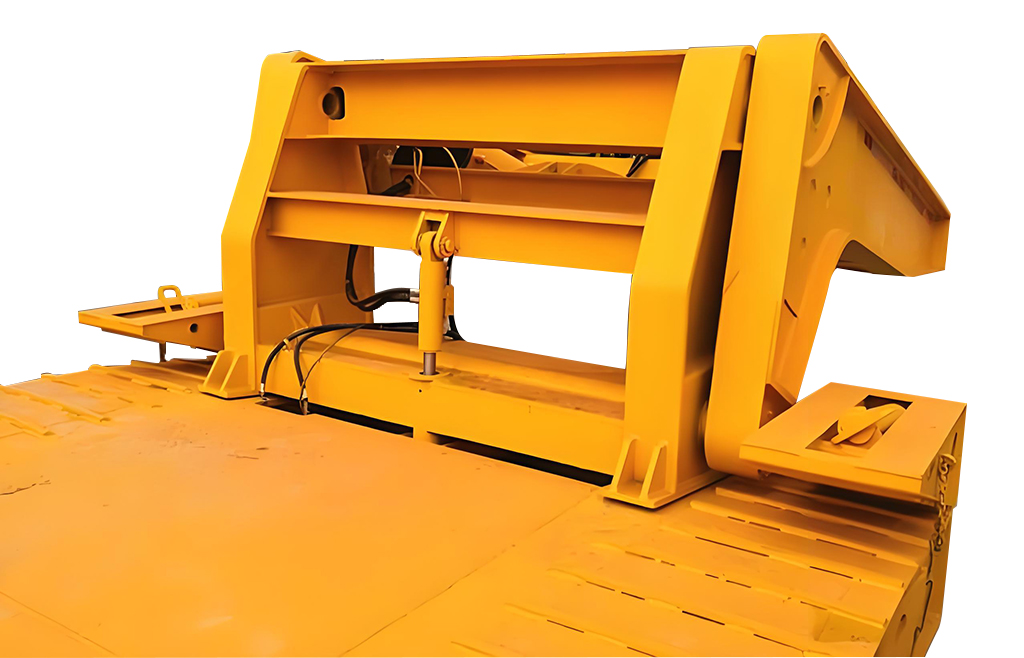
Noted | Removable Gooseneck allowing the trailer to be lowered to the ground, the cargo could move from the front of the trailer onto the vehicle's work platform. Generally, this type Lowbed Semi Trailer no longer requires a ladder at the back, but some customers choose to have a ladder at the back. |
The Removable Gooseneck Lowbed Semi Trailer is a purpose-engineered transport solution tailored for hauling heavy machinery and equipment—including excavators, loaders, bulldozers, scrapers, graders, pavers, milling machines, and compactors. Its 4-axle configuration features hydraulic or mechanical suspension systems that ensure optimal load distribution and stability.
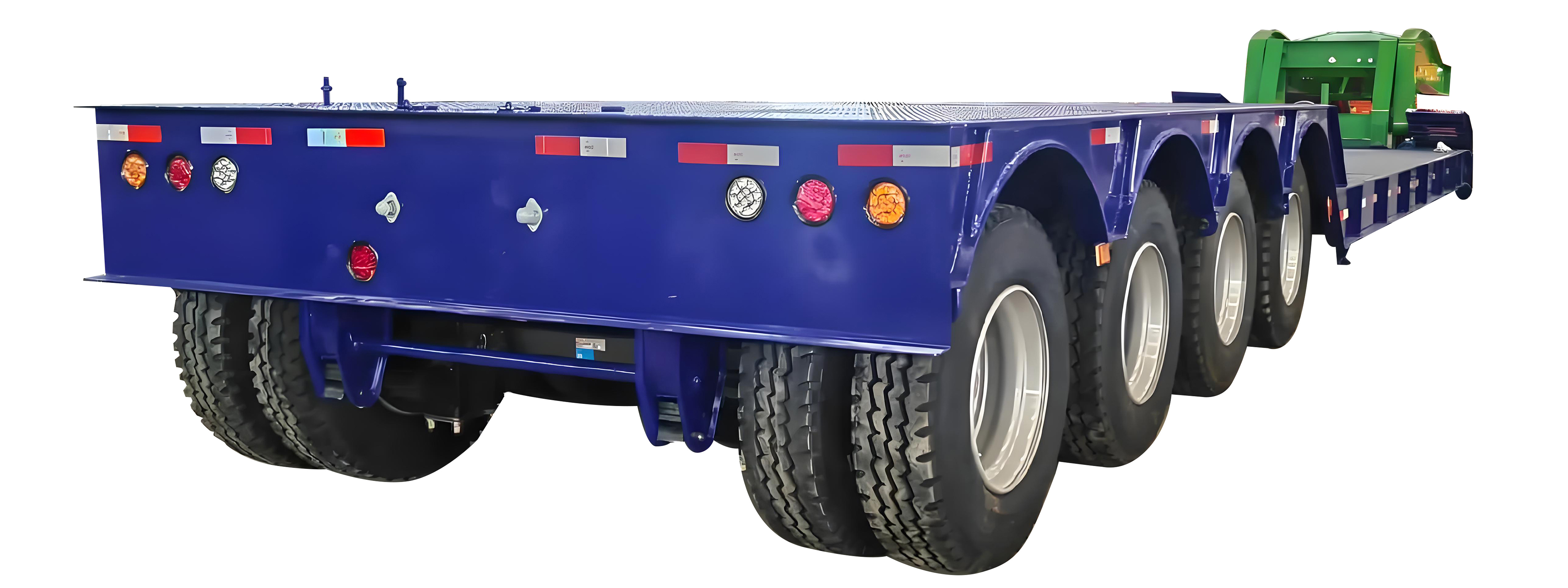
The Detachable Gooseneck enables ground-level loading, eliminating the need for ramps or cranes. Additional design elements include extendable decks for oversized cargo, multi-directional steering options, and a low-profile deck height for safe transport under bridges and overhead utilities.
Built from high-strength, low-alloy steel, the 4-axle trailer features a reinforced main beam structure that withstands extreme bending moments under concentrated loads. The multi-axle configuration incorporates individual suspension systems—often hydraulic or air-ride—that equalize weight distribution across all wheels, reducing ground pressure and enabling operation on softer terrain. The detachable gooseneck, operated hydraulically or mechanically, allows the deck to lower completely to ground level for drive-on loading of track-mounted machinery.
While the removable gooseneck typically negates the need for a rear ladder, the trailer offers optional rear-mounted ladders for specific use cases. For confined job sites where front access is limited (e.g., urban construction zones or narrow mining paths), a rear ladder enables convenient loading from the back. This flexibility ensures the trailer adapts to diverse workflow needs, rather than forcing operators to adjust processes.
Modern 4-axle models often include hydraulic axle compensation for rough terrain, multi-directional steering options for maneuverability, and modular deck extensions for oversized cargo. The low-profile deck height, ensures stable transport of tall equipment.
Despite its massive capacity, the trailer maintains operational flexibility. The multiple axles can be individually lifted when running empty to reduce tire wear and fuel consumption. Hydraulic suspensions allow deck height adjustment for loading docks or uneven job sites.
Major infrastructure projects depend on these trailers for deploying heavy construction machinery. They transport 200-ton crawler cranes to bridge erection sites, tunnel boring machines to subway projects, and piling rigs to foundation works. The trailer's stability during transit of tall, top-heavy machinery ensures safety on public roads between project phases.
It transports ultra-class hydraulic excavators weighing over 100 tons, massive haul truck bodies, blast hole drills, and underground shuttle cars. The multi-axle configuration distributes extreme loads safely across unpaved mine roads, while the low deck profile allows passage through limited-clearance tunnels and under conveyor systems.
In conventional power generation, they move massive generators, steam turbines, and replacement rotors to aging facilities. Hydroelectric projects utilize them for penstock sections and turbine runners. Wind farm construction relies on them to transport multi-megawatt nacelles, tower sections, and blade sets to often-remote installation sites.
Steel mills use them to transport massive rolling mill stands and furnace components. Shipyards rely on them for moving prefabricated hull sections and propulsion modules. Heavy equipment manufacturers utilize them for delivering finished products like mining shovels and mobile cranes to customer sites.
Beyond mainstream industries, these trailers serve niche applications including military logistics (transporting armored vehicles and bridge layers), aerospace (moving rocket stages and support equipment), and disaster response (delivering heavy rescue equipment to emergency sites).
We provide detailed operation manuals and telematics support and training on multi-axle load distribution, hydraulic gooseneck coupling procedures, and proper deck lowering protocols. Operators minimize loading errors, extend equipment service life, and maximizing equipment performance and safety.
We provide variable deck lengths and widths, with hydraulic or mechanical gooseneck detachment systems. Optional features include multi-axle steering for maneuverability, hydraulic suspension with axle compensation, and modular extensions for oversized cargo.
Customizations also include specialized paint systems for corrosion protection, telematics integration for fleet monitoring, and customized lighting packages for regional compliance.
A 12-month warranty covers key components (axles, hydraulics, steel structure), with a lifetime maintenance advisory.
Manufacturers offer extensive warranties covering structural components, hydraulic systems, and multi-axle suspensions.


