Tel: +86-183-6396-1712 E-mail: bruce@luckywaycn.com
English

Views: 0 Author: Site Editor Publish Time: 2026-03-10 Origin: Site


In Central Asia, asphalt logistics is a different game than in mild coastal climates. Temperature swings are larger, winter nights can be severe, and many routes involve long distances, cross-border waiting time, and uneven infrastructure. For an Asphalt Tanker Trailer, heating is not a “nice-to-have”—it is the core function that protects product quality and ensures the load can discharge on site. When the heating system is underpowered or poorly designed, the real costs show up immediately: slow unloading, incomplete discharge, higher fuel consumption, burned asphalt near hot spots, and operational delays that affect both the carrier and the paving crew waiting at the jobsite.
From our perspective as a supplier supporting international projects, the “optimal heating system” is not a single model that fits every fleet. It is the best match between: asphalt type, target discharge temperature, ambient conditions, delivery distance, fuel availability, maintenance capability, and the trailer’s insulation + heating layout. At Qingdao Xingjiayun International Trade Co., Ltd., we focus on helping buyers choose asphalt tank semi-trailers that perform reliably in real operating environments. In this guide, we’ll compare common heating system options, explain what matters most for Central Asia, and provide a practical checklist you can use when specifying your next trailer order.
Central Asia often combines:
long transport distances between plants and sites
cold seasons and cold nights that accelerate heat loss
variable road conditions that affect travel time
queue time at borders, plants, or construction zones
limited service access outside major cities
These conditions punish inefficient systems. The optimal heating system must deliver stable, controllable heat without creating local overheating, and it must work with strong insulation to reduce energy waste.
For asphalt tank semi-trailers, heating is used for two tasks:
Temperature holding (reduce heat loss during transport and waiting)
Reheating for discharge (restore flow and reach safe discharge temperature)
The optimal system is the one that achieves both with:
minimal fuel consumption
even temperature distribution
low risk of “burning” asphalt at the heat source
dependable operation in cold, windy conditions
This approach uses a burner and a heat path inside the tank system. It’s popular because it can provide strong heating power and relatively fast reheating.
Strengths
strong heat output for cold climates
relatively fast temperature recovery
widely understood and serviced in many markets
Risks to manage
local hot spots if heat distribution is uneven
higher chance of asphalt aging near heat surfaces if over-fired
requires careful burner control and operator discipline
Thermal oil systems circulate heated oil through coils or jackets, distributing heat more evenly.
Strengths
more uniform heating across the tank
lower risk of localized overheating
better controllability for temperature holding
Trade-offs
higher system complexity
more components (pump, oil circuit) to maintain
requires thermal oil management and inspection routine
Electric heating can be used in depots or fixed sites where power is available, but for long-haul operations it is rarely the primary heating method.
Strengths
clean operation at depots
simple control at stationary sites
Limits
depends on stable power supply
not practical as the only solution for mobile long-distance delivery
For many Central Asian operations, the most reliable performance comes from a high-efficiency burner system paired with strong insulation and a well-designed heat distribution layout, or a thermal oil system when temperature uniformity and product protection are the top priority.
In other words, the heating system alone does not win—heating + insulation + layout is the real system.
Heating System | Heat-up Speed | Temperature Uniformity | Complexity | Best Fit in Central Asia |
Direct burner (fire tube) | Fast | Medium (depends on layout) | Medium | Long-haul + cold starts where speed matters |
Thermal oil (indirect) | Medium | High | Higher | Fleets prioritizing uniform heating and product stability |
Electric (auxiliary) | Slow–Medium | High | Low–Medium | Depot holding, preheating, or stationary support |
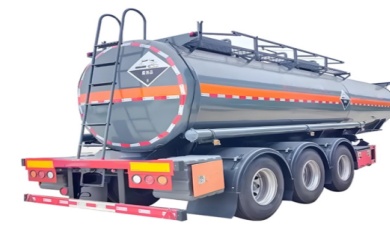
Many buyers spend time choosing a burner but under-spec insulation. In Central Asia, insulation often determines:
how long the asphalt stays workable
how much reheating is needed at site
how much fuel you burn over a season
Key insulation points
insulation thickness and material stability
full coverage (avoid thermal bridges)
durable outer cladding to resist weather and damage
insulation quality around manholes, valves, and rear discharge zone
If insulation is weak, even a powerful burner becomes expensive to operate.
The optimal system avoids “hot point damage” and supports full discharge.
Look for:
heating layout that supports both center mass and rear discharge area
controlled heat paths to avoid extreme local temperatures
temperature monitoring points that reflect real product temperature, not just surface heat
discharge valve area heating support (common cold spot)
Heating systems must match available fuel and service capability:
Diesel-fired burners are common where diesel supply is stable
Some fleets prefer systems that share fuel with the tractor for logistics simplicity
Service access matters—simpler systems can be easier to keep running in remote regions
The “optimal” system is the one your team can maintain consistently, not the one with the most features.
When requesting a quotation for an asphalt tanker trailer heating system, it helps to specify operating conditions in a clear, measurable way. Include your asphalt type and the target discharge temperature range, plus typical winter ambient temperature and wind exposure in your routes. Share the average haul distance and expected waiting time at borders, plants, or job sites, because holding performance matters as much as reheating speed. State your required discharge time target (fast vs normal), and confirm the fuel type you prefer and its availability. Define insulation thickness and outer cladding preference, then describe heating layout expectations such as rear discharge zone heating and valve heating. Finally, request details on temperature monitoring, safety controls, and your expectations for maintenance support and spare parts.
Topic | What to Ask | Why It Matters |
Heat-up time | From cold soak to discharge-ready | Impacts jobsite efficiency |
Holding efficiency | Temperature loss per hour | Determines fuel cost |
Uniformity | How hot spots are prevented | Protects asphalt quality |
Cold zone protection | Rear discharge + valves | Prevents incomplete discharge |
Controls | Burner modulation + safety cutoffs | Reduces operator risk |
Choosing burner power without insulation planning
High power cannot compensate for poor insulation economically.
Ignoring rear discharge heating
Many discharge failures happen at the valve zone, not in the tank center.
Overheating to “speed things up”
It can create local damage and increases operating cost.
Not planning for waiting time
Border queues and site delays are real—holding performance matters.
So, what is the optimal heating system for asphalt tank semi-trailers in Central Asia? In most real projects, the best results come from a system that balances heating power, temperature uniformity, insulation performance, and practical serviceability. For fleets that need fast reheating after cold starts, a well-designed burner system with strong insulation and smart heat distribution is often the most practical choice. For operations that prioritize uniform temperature control and minimizing hot spots, a thermal oil heating system can be an excellent option—especially when maintenance support is available. In every case, “optimal” is achieved when heating, insulation, and discharge-zone design are engineered as one system.
At Qingdao Xingjiayun International Trade Co., Ltd., we support buyers who need asphalt tanker trailers that work reliably under real Central Asian conditions, including long-haul routes and winter operations. If you are planning a new purchase or upgrading your fleet specification, you’re welcome to learn more through Qingdao Xingjiayun International Trade Co., Ltd. and contact our team for product information and configuration recommendations.
For many fleets, the optimal solution is a high-efficiency burner system combined with strong insulation and good heat distribution. Thermal oil systems are also ideal when uniform heating control is a top priority.
Thermal oil heating typically provides more uniform temperature distribution and reduces hot spots, but it adds system complexity. Direct burner systems can heat faster and are often simpler to service.
Insulation is critical in Central Asia. Better insulation reduces temperature loss during transport and waiting time, lowering fuel consumption and improving discharge reliability.
Common causes include insufficient reheating capacity, poor insulation, and cold spots at the rear discharge valve area. A well-designed heating layout and valve-zone heating support help prevent this.


