Tel: +86-183-6396-1712 E-mail: bruce@luckywaycn.com
English

Views: 0 Author: Site Editor Publish Time: 2026-02-27 Origin: Site


If you’re specifying a Fuel Tanker Trailer for South America, the most important step is to stop thinking in “one country, one checklist.” South America is a region where regulations, enforcement focus, and industry practice vary by country—yet many buyers operate across borders (MERCOSUR routes, regional distributors, cross-country fuel supply). That means your safest purchasing strategy is to build a tanker specification around widely recognized hazardous-goods principles, then add country-specific compliance details where required—especially for identification, documentation, emergency equipment expectations, and vehicle/equipment approvals.
When buyers ask what a tanker “must have,” there are usually three layers:
Legal compliance (country regulations + referenced standards)
Operator requirements (oil company / distributor / terminal acceptance rules)
Risk control engineering (features that reduce incidents even when rules are not explicit)
A winning South America spec typically covers all three—because even if one country’s regulation is less detailed on a specific hardware feature, terminals and insurers may still require it as part of safe operation.
For fuel transport, the tank must be built with appropriate materials, welding quality, and verified integrity. The “configuration” here isn’t just steel vs aluminum—it’s also:
Controlled weld quality and inspection plan
Pressure/leak integrity verification
Proper reinforcement at high-stress areas (manholes, nozzle pads, mounting points)
In Brazil, ANTT’s hazardous goods regulation is supported by complementary instructions and oversight mechanisms that touch on adequacy/certification and proper identification of transport equipment for dangerous goods.
Fuel tankers often use multiple compartments to:
reduce liquid surge during braking/turning
allow multi-grade delivery
improve stability and braking control consistency
If you operate on mountainous routes or mixed urban/highway conditions (common across the region), surge control becomes a practical safety requirement even when not spelled out line-by-line in a single law.
Fuel tanks must safely manage pressure changes due to temperature and loading/unloading. Typical configurations include:
pressure/vacuum vents (properly sized)
flame arrestor strategies where applicable
rollover-sensitive vent designs that reduce spillage risk when overturned
For fuel delivery incidents, the critical safety question is: Can you stop flow quickly, reliably, and under stress?
A robust tanker spec typically includes:
emergency shutoff valves on outlet lines
fail-safe valve behavior (designed to close under emergency conditions)
protected valve placement to reduce damage in collisions/rollovers
Many professional fuel distribution systems prefer bottom loading and bottom discharge because it:
reduces splash and vapor release compared to top operations
improves operator ergonomics and reduces fall risk
supports controlled coupling systems
Key configuration points:
API-compatible couplers (where required by terminal practice)
sealed adapters and caps
mechanical protection for vulnerable components (guards and shield plates)
Overfill events are one of the most avoidable causes of spills. Safety configurations often include:
overfill sensor compatibility
high-level alarms (system-level, sometimes terminal-controlled)
safe fill procedures supported by hardware design (proper venting + filling control)
Even where laws focus more on general safety obligations, terminals may enforce overfill prevention as an acceptance requirement.
Fuel delivery involves small but frequent operations (sampling, draining lines, hose handling). Helpful configurations include:
controlled drain points
drip trays / containment strategies in the design
capped outlets and clean hose stowage
These are small details that dramatically reduce “minor spills” that become major compliance and reputation issues.
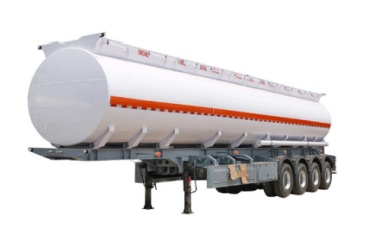
South American fleets operate in diverse conditions—wet mountain roads, congested city routes, and long-distance highways. A fuel tanker should be equipped and configured for stable braking, and many buyers treat modern braking controls as part of baseline safety.
Typical configurations include:
ABS (anti-lock braking system)
EBS options (where used in the fleet)
properly matched brake sizing for gross combination mass
well-designed air system layout and protection
Tankers carry high center-of-gravity loads. Safety configuration is about lowering rollover risk via:
stable suspension selection
appropriate track width and axle group configuration
careful tank mounting height control
stability-focused engineering (not just “more capacity”)
Physical guards reduce severity of collisions and reduce contact with critical piping and valves. Many operators want:
rear underrun protection
side guards where applicable
guarded routing for hoses and valves
Visibility reduces accidents. While marking details vary by country, the practical configuration should include:
high-visibility reflective tape
compliant lighting layout
clear hazard placarding locations and mounting points
Fuel operations are sensitive to ignition risks. A professional configuration approach includes:
Provide:
dedicated grounding lugs
bonding cable storage
clear grounding connection access for operators
Static management isn’t one single part—it’s a system of:
proper grounding procedures supported by hardware
conductive pathways where required
avoiding design features that promote uncontrolled static buildup
Where possible:
protect wiring and components from chafing
avoid unprotected metal-on-metal contact points near product lines
include guards around areas with higher strike risk
This is where South America-specific compliance details often appear most clearly.
Brazil’s ANTT hazardous goods regulation includes requirements around transport conditions and signaling/identification in the complementary instructions context.
Chile’s Decreto 298 provides a dedicated framework for dangerous cargo on roads.
Argentina’s legal framework for dangerous goods by road is tied to Decree 779/95 and its Annexes (including Annex S).
Peru’s DS 021-2008-MTC is a national regulation for road transport of hazardous materials and waste.
Colombia’s Decree 1609/2002 explicitly frames technical and safety requirements for dangerous goods by road.
Brazil-focused compliance discussions commonly highlight the importance of having a 24/7 emergency response contact number included in required documentation and emergency information used in MERCOSUR road dangerous goods practices.
Procurement implication: ensure your operational paperwork workflow and unit identification plan are compatible with how your target country expects emergency and hazard information to be carried and displayed.
Use this table to validate whether a tanker semi-trailer is “spec-complete” for cross-border and multi-terminal operations.
Safety Area | Configuration to Specify | Why It Matters in South America Operations |
Tank integrity | Certified fabrication + inspection plan | Reduces leak and fatigue risk on long routes |
Surge control | Compartments / internal control strategy | Improves stability under braking and turns |
Spill control | Protected valves + emergency shutoff capability | Limits incident severity during failure events |
Loading system | Bottom loading/discharge capability + guarded fittings | Faster, safer, more terminal-friendly operations |
Overfill readiness | Overfill sensor compatibility + venting strategy | Prevents one of the most common spill causes |
Road stability | ABS (and EBS option) + stability-focused suspension | Reduces skid and rollover risk |
Conspicuity | Lighting + reflective markings + placard mounting plan | Improves visibility, supports compliance |
Static/ignition risk | Grounding points + bonding cable workflow | Lowers ignition risk during transfer |
Compliance workflow | Hazard ID + documentation readiness per country | Avoids border/inspection delays |
So, what safety configurations must tank semi-trailers have in South America? The most reliable answer is to build a tanker that is safe by design—strong tank integrity, surge control, protected valves, emergency shutoff capability, overfill-ready loading systems, stability-focused braking and suspension, and clear hazard identification—and then align the compliance details with the countries you operate in (Brazil’s ANTT framework, Chile’s Decreto 298, Argentina’s Decree 779/95 Annex S approach, Peru’s DS 021-2008-MTC, and Colombia’s Decree 1609/2002, among others).
At Qingdao Xingjiayun International Trade Co., Ltd., we help buyers translate “regulation language” and “terminal practice” into a practical tanker specification—so the trailer you purchase is not only competitive on price, but also ready for inspection, safe for operators, and stable on real South American routes. If you’re planning a fuel transport project and want a configuration checklist tailored to your target countries and loading terminals, you can learn more through Qingdao Xingjiayun International Trade Co., Ltd. and contact our team for selection support.
For real-world operations, the most important combination is spill control + stability: protected valves with emergency shutoff capability, plus braking and rollover-risk reduction features.
Not exactly. Countries have their own frameworks (for example Brazil’s ANTT regulation, Chile’s Decreto 298, Argentina’s Decree 779/95 Annexes), so buyers should build a core spec and then match country-specific compliance details.
Because these configurations support safer, cleaner, and more controlled transfer operations—reducing spills, operator risk, and loading variability across shifts.
Inspections often focus on hazardous goods identification/signaling and documentation readiness under the applicable national framework (such as Brazil’s ANTT rules or other national dangerous goods regulations).


