Tel: +86-183-6396-1712 E-mail: bruce@luckywaycn.com
English

Views: 299 Author: Site Editor Publish Time: 2026-04-09 Origin: Site


Navigating the logistics landscape in Brazil requires more than just heavy-duty machinery; it demands a deep understanding of complex regulatory frameworks. If you are operating a lowbed semi trailer to move oversized equipment through the Amazon basin or across the busy highways of São Paulo, you know that missing a single permit can lead to massive fines or impounded cargo. Brazil’s National Department of Transport Infrastructure (DNIT) and the National Transit Council (CONTRAN) enforce strict rules regarding weight, dimensions, and transit times. This guide breaks down exactly which permits you need to keep your heavy duty fleet moving legally and efficiently.
The most critical document for any 3 axle or multi axle lowbed semi trailer carrying indivisible loads in Brazil is the Autorização Especial de Trânsito (AET). You cannot bypass this. It serves as the legal backbone for transporting cargo that exceeds standard national limits for weight or size.
Brazil’s infrastructure varies wildly. While some federal highways (BRs) are modern, many regional routes feature aging bridges or low overpasses. The AET process forces operators to declare their exact route. DNIT evaluates if your heavy duty equipment can pass safely without damaging public property. If you operate a detachable gooseneck trailer to haul mining excavators, the AET ensures the road can handle that concentrated pressure.
DNIT issues different categories based on the frequency of your trips and the nature of the load:
Specific AET: Valid for a single trip along a defined route. It is perfect for one-off deliveries of massive industrial components.
Annual AET: If your lowbed semi trailer stays within certain weight and dimension thresholds (usually for "smaller" oversized loads), you might qualify for a permit valid for up to a year.
To secure this permit, you must provide the vehicle’s CRV (Certificate of Vehicle Registration), a detailed sketch of the load arrangement, and a structural analysis if the gross weight is exceptionally high. They check everything. They want to see how many axles your multi axle setup has to ensure weight distribution meets the "Law of the Scales" (Lei da Balança).
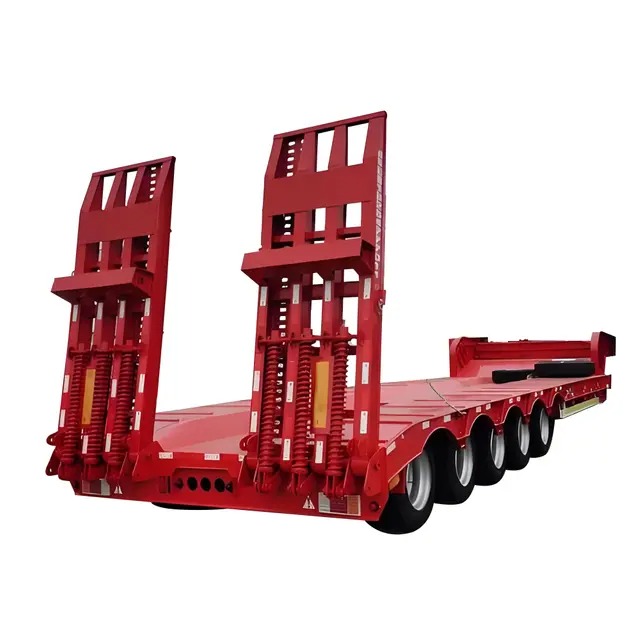
In Brazil, weight isn't just about the total; it is about how that weight hits the pavement. The "Lei da Balança" (Scale Law) dictates the maximum weight per axle group. For a lowbed semi trailer, mastering these numbers is the difference between a smooth trip and a forced stop at a weighing station.
The Gross Total Weight (PBT) depends heavily on your configuration. A standard 3 axle setup has different limits compared to a 4 axle or multi axle configuration.
| Axle Configuration | Maximum Weight per Group (Estimated) | Common Application |
| Single Axle (Dual Tires) | 10 Tons | Light industrial loads |
| Tandem Triple Axle | 25.5 Tons | Standard lowbed semi trailer |
| 4 Axle Group | 28.5 - 30 Tons | Heavy duty machinery |
Brazil allows a 5% tolerance on the total weight and a 12.5% tolerance on the weight per axle. If you exceed these, authorities will make you redistribute the load or transfer it to another vehicle right there on the shoulder. For an extendable trailer, this is tricky because shifting the length changes the weight distribution. We recommend always weighing your lowbed semi trailer before hitting the federal highways.
If you use a detachable gooseneck, the weight of the neck itself adds to the front axle load of the tractor. DNIT technicians look at these specifics. They ensure your 3 axle rear group isn't carrying 90% of the weight while the front tires barely touch the ground. Proper loading is a safety requirement for permit approval.
Size matters just as much as weight in the Brazilian permit office. A lowbed semi trailer is designed to be low to the ground, specifically to fit under bridges, but the width and length often trigger the need for special escorts.
The standard legal width in Brazil is 2.60 meters. Most heavy duty trailers carrying construction equipment exceed this.
Up to 3.20 meters wide: Usually requires a standard AET but might not need a private escort (Escolta).
Over 3.20 meters wide: Now you enter "Special Escort" territory. You may need one or two certified escort vehicles with flashing lights to lead and follow your lowbed semi trailer.
Using an extendable lowbed semi trailer provides flexibility, but it complicates the permit. You must declare the maximum extended length. If your total vehicle length exceeds 30 meters, you are restricted to daytime travel only. DNIT won't let a 35-meter long multi axle rig navigate mountain passes in the dark. It is too risky for other drivers.
For "super-loads"—those exceeding 150 tons or extreme dimensions—an AET isn't enough. You need a Viabilidade de Tráfego (VTR). Engineers must physically check the route. They look for:
Overhead Cables: Can your heavy duty load clear power lines?
Bridge Integrity: Will the 4 axle pressure cause structural failure?
Turning Radii: Can your extendable trailer make the tight turns in rural Minas Gerais?
If your lowbed semi trailer is massive, the permit will mandate "Escolta Armada" or specialized traffic escorts. This isn't a suggestion; it is a line item on your legal authorization.
Private Escort: For loads of moderate excess (e.g., width between 3.20m and 3.80m), you hire certified private companies. They use vehicles equipped with specific signage and orange lights.
PRF (Federal Highway Police) Escort: If your heavy duty multi axle trailer is wider than 5.00 meters, you often need the PRF. This requires advanced scheduling and higher fees. They will literally shut down lanes of traffic to let your lowbed semi trailer pass.
The permit specifies exactly how you must mark your lowbed semi trailer.
Rear Plates: You need a reflective yellow and orange "VEÍCULO LONGO" (Long Vehicle) sign.
Side Markers: Reflective tape must outline the entire length of the 3 axle or 4 axle chassis.
Flags: During the day, red flags must mark the widest points of the load.
Your permit isn't a 24/7 pass. In Brazil, oversized lowbed semi trailer units are generally restricted to:
Monday to Friday: Sunrise to sunset.
Saturdays: Usually until noon.
Sundays and Holidays: Often completely prohibited on major tourist routes.
We always check the PRF calendar before planning a long-haul trip, as holiday bans can strand a heavy duty load for 48 hours.
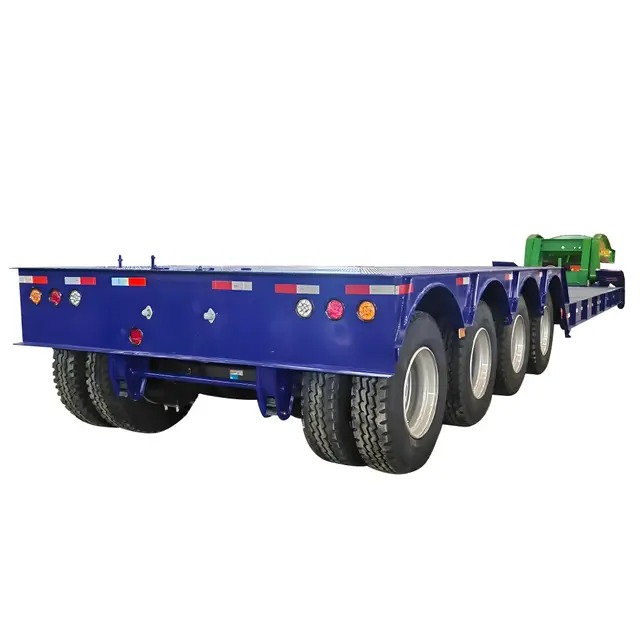
Brazil is a federation, and while DNIT handles federal roads, state agencies (DER) handle state roads. This is where many operators get confused. If your lowbed semi trailer moves from a federal "BR" highway to a state "SP" or "MG" highway, you need separate permits.
Each state has its own Department of Highways (DER). If you take a detachable gooseneck trailer from the port of Santos to a mine in the interior, you will likely need both a DNIT AET and a DER-SP AET. The rules are similar, but the portals are different.
If you are hauling equipment for "hazardous" industries or through protected biomes, sometimes an environmental permit is required. While the lowbed semi trailer itself doesn't need an environmental license, the operation of hauling specific industrial gear might. They want to ensure that if your heavy duty rig breaks down in a rainforest, there is a plan to prevent oil spills.
Many of Brazil's best roads are privatized. These "Concessionárias" have their own rules for oversized loads. They often require you to call 24 hours in advance so they can widen the toll plaza lanes or temporarily remove barriers to let your multi axle trailer through. It keeps the traffic flowing and keeps your lowbed semi trailer scratch-free.
The type of lowbed semi trailer you choose determines how easy it is to get a permit. DNIT favors configurations that protect the road surface.
A multi axle (6, 8, or more axles) configuration is often the only way to get a permit for ultra-heavy loads. By spreading the weight across more tires, you stay under the per-axle limit of the "Lei da Balança." We see many operators moving from a 3 axle to a 4 axle setup just to reduce permit costs, as lighter axle loads sometimes bypass the need for expensive structural route surveys.
A detachable gooseneck is highly valued for safety. Because it allows front-loading, the center of gravity remains lower and more stable. Brazilian inspectors appreciate this. A stable load is less likely to shift and cause an accident, making the permit approval process for your heavy duty cargo much smoother.
When hauling wind turbine blades or long steel beams, an extendable lowbed semi trailer is essential. However, the permit will be specific to the "extended" length. You cannot use a permit for a 20-meter trailer if you have extended it to 30 meters. This is a common point for fines.
While not a "permit" per se, having your vehicle inspection (CSV) up to date is required for the AET application. If your 3 axle trailer has worn brakes or faulty lights, the DNIT system might flag your registration, preventing the issuance of new permits.
Operating a lowbed semi trailer in Brazil is a high-stakes game of compliance. From the mandatory AET to the strict per-axle weight limits of the "Lei da Balança," every detail matters. Whether you are using a 3 axle unit for local hauling or a multi axle heavy duty rig for cross-country transport, you must synchronize your route planning with state and federal regulations.
Remember that an extendable or detachable gooseneck trailer offers the versatility needed for different permits, but they also require precise data entry during the application phase. By staying ahead of the paperwork and understanding the role of escorts and timing restrictions, you ensure that your logistics operation remains profitable and safe.
Q1: How long does it take to get an AET permit in Brazil?
For standard oversized loads on a 3 axle lowbed semi trailer, it usually takes 24 to 48 hours through the DNIT online portal. However, for "super-loads" requiring a VTR (Route Feasibility Study), it can take weeks.
Q2: Can I use the same permit for federal and state highways?
No. You typically need a DNIT permit for federal roads (BR) and a DER permit for state roads. If your route includes both, you must hold both authorizations.
Q3: What happens if my 4 axle trailer is overweight?
If caught at a scale, you will be fined. You won't be allowed to proceed until the excess weight is removed or redistributed. This can be extremely expensive if you need to hire a second heavy duty crane to move the load.
Q4: Is a private escort always required for a lowbed semi trailer?
Only if you exceed specific dimensions. Generally, if your width is over 3.20 meters or your total length is over 25-30 meters, the permit will mandate an escort.
At LUCKYWAY, we are not just a manufacturer; we are your strategic partner in heavy-duty logistics. As a premier factory specializing in high-performance transport solutions, we understand the rigors of international shipping and the strict requirements of markets like Brazil. We build every lowbed semi trailer with precision engineering, ensuring our 3 axle, 4 axle, and multi axle configurations meet global standards for weight distribution and safety.
Our strength lies in our customization. Whether you need a heavy duty detachable gooseneck for easy loading or an extendable chassis for specialized cargo, we deliver durability that lasts. We have invested heavily in advanced welding technology and high-tensile steel to ensure our trailers handle the toughest terrains. When you choose LUCKYWAY, you are choosing a legacy of reliability and a team dedicated to helping you navigate the complexities of the road, wherever your business takes you.


