Tel: +86-183-6396-1712 E-mail: bruce@luckywaycn.com
English

Views: 0 Author: Site Editor Publish Time: 2026-02-04 Origin: Site


When someone searches Sulfuric Acid Tanker Trailer permits in Brazil, they want clarity fast.
They also want to avoid fines, delays, and rejected loads.
So we’ll keep the language simple, then get specific.
What “special permit” means in Brazil, not in the U.S.
Which agencies control hazardous road transport and inspections.
Which documents a Sulfuric Acid Tanker Trailer must carry on the road.
Which certificates prove the tank and vehicle are approved.
When route or oversize authorizations apply to a tank semi-trailer.
Map the approvals into a simple checklist.
Spot the common compliance gaps before dispatch day.
Talk to carriers and inspectors using the right terms.
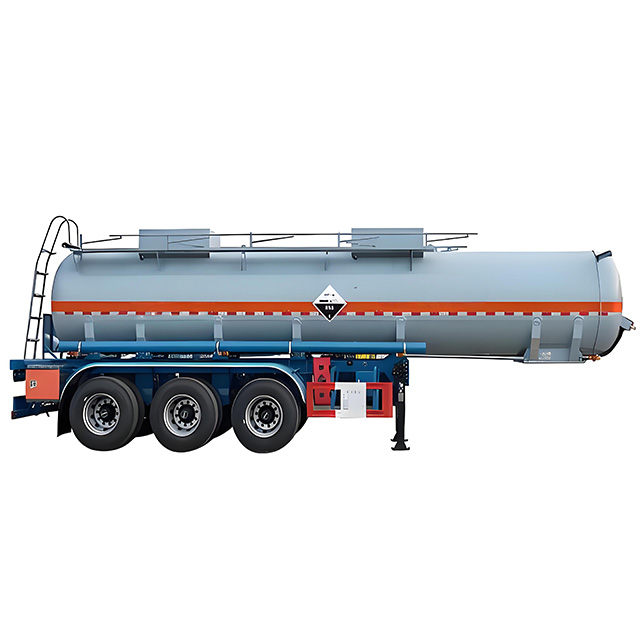
Sulfuric acid is a corrosive cargo. It punishes weak materials.
It also turns small leaks into big emergencies, very quickly.
So regulators focus on containment, labeling, and response readiness.
Corrosion attacks carbon steel, seals, and fittings over time.
Spills burn skin and damage pavement, drains, and vehicles.
Loading splash and hose failures cause many real incidents.
Emergency response needs distance control and fast isolation.
You’ll often see UN 1830 for sulfuric acid in global shipping systems.
It is commonly listed as Class 8, corrosive materials.
Different concentrations can change handling expectations and controls.
| Trip stage | What often goes wrong | Why inspectors care |
|---|---|---|
| Pre-trip | Old gaskets, corroded valves | Small defects can become roadside releases |
| Loading | Splash, wrong hose, loose coupling | High injury risk, high spill probability |
| Transit | Vibration loosens fittings | Leak grows, response time is longer |
| Unloading | Vent, pressure, operator error | Most exposure happens near connections |
The term “special permit” confuses teams. It changes by country.
In the U.S., PHMSA uses “special permits” as formal regulatory variances.
In Brazil, people often use the phrase more broadly.
They may mean mandatory certificates, plus route authorizations.
Dangerous goods inspection certificates for the vehicle and tank equipment.
Special traffic authorizations for oversize or overweight combinations.
Wrong term can send you to the wrong office.
Missing one paper can stop the trip at a roadside check.
Shippers may demand extra controls beyond legal minimums.
| Item people call “permit” | What it really is | Why it exists |
|---|---|---|
| CIV | Vehicle inspection certificate for dangerous goods service | Proves the running gear passed periodic inspection |
| CIPP | Tank equipment inspection certificate for dangerous goods | Proves the tank system is fit for hazardous bulk cargo |
| AET | Special traffic authorization for weight or dimension exceptions | Controls route, validity, and safety conditions |
In Brazil, ANTT regulates road transport of dangerous products.
It sets baseline rules for documents, markings, responsibilities, and enforcement.
For many operations, this becomes the “why” behind special permits.
Correct product identification, classification, and shipment documentation.
Vehicle and tank equipment in compliant condition, ready for inspection.
Emergency response information available during the trip.
Clear roles for shipper, carrier, and receiver.
A tank acts like the “package” for bulk hazardous cargo.
So equipment condition becomes a legal safety requirement.
Corrosion risk pushes stronger inspection discipline.
For bulk hazardous transport, Brazil relies on inspection certificates.
These are the big ones people mention first: CIV and CIPP.
They prove periodic inspection approval, not a one-time promise.
CIV focuses on the vehicle’s running gear used for dangerous goods.
CIPP focuses on the tank or equipment holding the dangerous goods.
Shell condition, weld integrity, corrosion signs.
Valves, closures, vents, outlets, safety components.
Mounting, supports, protection for fittings.
Identification plates, traceability, inspection history.
Prepare documents and inspection history for the unit.
Book inspection via accredited inspection bodies.
Fix any nonconformities, then retest if needed.
Carry valid certificates during transport operations.
Tank ID and specification plate data, legible and consistent.
Valve list, gasket materials list, maintenance records.
Leak test results, if your program requires it.
Photos of fittings protection and discharge arrangement.
Some trips need more than hazardous cargo paperwork. The vehicle itself can trigger extra permission.
In Brazil, people often call it an AET. It covers special circulation on specific roads.
It usually applies when your combination exceeds legal limits for weight or dimensions.
Which route you can use, plus which highways you must avoid.
Time windows, sometimes night-only or off-peak travel.
Extra safety conditions, escort needs on some stretches.
Validity period, often tied to one journey or a limited schedule.
Tank semi-trailers come in many axle layouts. Some carry high gross weights.
When your operation pushes limits, authorities want control of road impact and risk.
It makes sense. A corrosive load plus a restricted bridge equals a bad day.
| Factor | What to check | Why it matters |
|---|---|---|
| Weight | Gross combination mass, axle loads | Overloaded axles increase road and bridge stress |
| Dimensions | Overall length, width, height | Over-dimension units face clearance and turning limits |
| Route | Federal vs state roads, local restrictions | Different authorities, different permit workflows |
Even when you have certificates, the trip can still fail on operations.
Inspectors look for readiness. Shippers look for discipline. We should too.
A Sulfuric Acid Tanker Trailer needs more than a strong tank shell.
Emergency contact chain, clear and current.
Spill response basics, matched to corrosive hazards.
Driver knows isolation steps and safe distances.
Onboard items required by carrier policy, plus shipper rules.
Driver hazardous cargo training, current for Brazil operations.
Loading crew competency, especially hose and valve handling.
Site induction records, used at plants and terminals.
“Stop work” authority. They must use it when something looks wrong.
Most incidents happen near connections. So we plan those minutes carefully.
Use compatible hoses and gaskets. Acid punishes the wrong elastomer.
Confirm valve positions before pump start. Do it twice.
Use splash guards and controlled venting. It reduces exposure.
Rinse and neutralization steps follow site policy, not driver preference.
Some people see permits as paperwork. Brazil sees them as prevention tools.
For corrosive cargo, prevention beats cleanup every time.
Bulk transport has no small container to fail first. The tank is the container.
If it leaks, it leaks a lot. So authorities demand proof of fitness.
Sulfuric acid attacks weak spots over time. It also accelerates seal aging.
Periodic inspection programs catch issues early. They also create accountability.
A spill can damage roads, drains, and nearby vehicles. People get hurt fast.
So rules push emergency readiness and safe operating procedures.
If your combination is heavier or longer, route choice matters even more.
Authorities use route authorization to reduce bridge stress and traffic risk.
| Control | What it reduces | Who benefits |
|---|---|---|
| Tank inspection certificates | Equipment failure risk | Public, carrier, shipper |
| Operational documentation | Confusion during inspections and emergencies | Driver, inspectors, responders |
| Route authorization | Infrastructure and traffic exposure risk | Road authority, public |
Permits start on paper. Compliance starts in design.
If the tank design fights the cargo, no permit will save the trip.
Stainless steel options, used for corrosion resistance in acid service.
Carbon steel plus lining, used in some setups, requires strict lining control.
Fittings materials, often the first failure point if mis-specified.
Protected bottom discharge, shielded against road debris.
Reliable venting design to control pressure during temperature change.
Clear labeling and durable ID plates for inspection traceability.
Safe access design for operators, so they do not improvise.
Many buyers search DOT tank codes first. It is common. It is also U.S.-centric.
Use it as a learning tool, not as proof of Brazil compliance.
Brazil focuses on its own road dangerous goods framework plus inspection approvals.
| Topic | U.S. shorthand people know | Brazil reality teams must follow |
|---|---|---|
| Tank “type” language | DOT spec references | Brazil compliance checks and inspection certificates |
| Permit term | PHMSA special permit variance | Often CIV/CIPP + route authorization, as applicable |
Let’s turn it into steps. It feels manageable when you see the order.
Do it early. Do it before dispatch. It avoids expensive surprises.
Confirm concentration, temperature range, plus impurities.
Match it to correct classification and shipment paperwork.
Align it to the tank material and gasket compatibility.
Prepare the inspection history and maintenance records.
Inspect valves and closures, then fix small defects early.
Verify ID plates and traceability. Inspectors hate missing IDs.
Shipment documentation, consistent on product naming and identifiers.
Emergency information sheet, easy to read in a crisis.
Proof of valid inspection certificates for vehicle and tank equipment.
Check weight and dimensions against the planned route rules.
Apply for AET when limits exceed. Do not wait until loading day.
Follow route conditions exactly. Inspectors do check.
Confirm hose type, gasket material, and connection standard at both sites.
Align PPE level and rinse plan to shipper and receiver policy.
Run a short pre-task briefing. It prevents “almost accidents.”
Most failures are predictable. We see patterns. You can avoid them.
Fix: treat Brazil as its own system. Plan inspection steps early.
Fix: verify required certificates and validity periods before booking cargo.
Fix: keep a clean document folder in the cab, plus digital backup.
Fix: run a dispatch checklist. Make it routine, not optional.
Fix: standardize compatible spare parts for acid service.
Fix: replace seals on schedule, not only after leaks appear.
Fix: check route restrictions during quoting, not after loading.
Fix: keep axle load calculations ready. Inspectors may ask.
| What fails | What happens | Simple prevention |
|---|---|---|
| Certificate expired | Trip stops, load delayed | Renewal calendar and pre-dispatch check |
| Wrong hose material | Loading refused, safety incident risk | Hose compatibility list per product grade |
| No route authorization | Detour or denial on controlled roads | Route plan verified before scheduling |
Hazardous cargo rules apply every time. Extra permits depend on equipment status and route limits.
So yes, you always need compliance. No, you do not always need route authorization.
They often start on vehicle and tank inspection validity. It proves basic fitness for service.
They also want transport documents, plus emergency information. Keep it organized.
Think of three roles. Regulators set the rules. Inspectors certify equipment. Road agencies control circulation limits.
On the road, enforcement focuses on documents and visible compliance signs.
Sometimes yes. It depends on inspection acceptance and compliance path.
Plan it early. Budget time for inspection and documentation alignment.
Yes, often. They may demand stricter PPE, specific hose standards, plus loading procedure steps.
Follow their policy. It also protects your team.
You can treat permits as a headache. Or you can treat them as a system.
A system reduces incidents. It also makes dispatch smoother.
If you want product options, visit www.luckywaycn.com.
Category overview: Sulfuric Acid Tanker Trailer
Example configuration: Anti-Corrosion Stainless Steel Sulfuric Acid Tanker Trailer
Related category: Chemical Tanker Semi Trailer
Broader category: Tanker Trailer
Capacity target, axle configuration, plus intended road network in Brazil.
Material preference, lining preference, plus outlet arrangement.
Sulfuric acid grade and operating temperature range.
Your loading method, pump type, plus hose connection standard.


