Tel: +86-183-6396-1712 E-mail: bruce@luckywaycn.com
English

Views: 0 Author: Site Editor Publish Time: 2026-07-09 Origin: Site


Transporting liquid bitumen in environments where ambient temperatures routinely drop below -30°C alters the fundamental physics of fluid dynamics and thermal retention. When asphalt drops below its critical pumping temperature, typically between 130°C and 150°C, viscosity spikes exponentially. Standard trailers fail in extreme cold. This leads to solidified cargo, catastrophic equipment damage, delayed projects, and massive recovery efforts. Mitigating these risks requires moving beyond standard fleet specifications. You must rethink how you specify and operate your equipment. This guide evaluates the engineering requirements, active heating solutions, and procurement criteria necessary for reliable cold weather asphalt transport. We break down exactly how to configure your fleet to survive and operate efficiently in the harshest winter conditions without relying on guesswork.
Passive Insulation is the Foundation: A high-performance heat insulated bitumen tanker relies on specialized, high-density insulation (minimum 100mm–150mm) and thermal break engineering to slow heat loss in sub-zero environments.
Active Heating is Non-Negotiable: Relying solely on loading temperature is unviable for long-haul Russian routes; integrated diesel heating systems or thermal oil circuits are required to maintain strict bitumen temperature control.
Vulnerable Components Dictate Success: Valves, discharge pipes, and pumps are the primary failure points in extreme cold and require dedicated heating jackets and winterization protocols.
Autonomy and Power Redundancy: Burners and auxiliary components must possess independent power sources (APUs) to prevent system shutdowns during driver rest cycles and avoid truck idling violations or failures in remote regions.
Maintaining 180°C internal temperatures against -40°C external environments requires precise engineering. The thermal delta is massive. Liquid asphalt follows a specific cooling curve based on ambient exposure and tank surface area. Once it crosses the lower threshold of 130°C, pumpability is lost completely. Your operational goal is clear. You must achieve a heat loss rate of less than 1°C to 2°C per hour under extreme ambient conditions. Anything higher guarantees a frozen load on long routes. Field data shows that a standard 50mm insulated tank loses up to 5°C per hour at -30°C. You cannot outrun that heat loss on a 24-hour transit. You need heavy-duty thermal retention combined with active heating to keep the product in a liquid state.
Ambient Temperature | Insulation Thickness | Average Heat Loss (per hour) | Safe Transit Window (without active heat) |
|---|---|---|---|
-10°C | 50mm | 3.5°C | 12 Hours |
-30°C | 100mm | 2.8°C | 15 Hours |
-40°C | 150mm | 1.5°C | 28 Hours |
Thermal stratification occurs naturally inside the tank. Asphalt cools faster near the tank walls and bottom. This forms a highly viscous crust while the core remains hot. Single-point temperature sensors fail to detect this stratification. They read the hot core and ignore the cooling edges. Opening discharge valves when the bottom layer has partially solidified poses a massive operational risk. It blocks the flow and damages the pumping equipment. You must install multi-point sensor arrays. Place probes near the bottom discharge valve, along the sidewalls, and in the center. This gives dispatchers a true thermal map of the load. If the bottom sensor shows a 20°C drop compared to the core, you know stratification is happening. You must activate the heating system immediately to break down that crust before unloading.
A frozen load carries severe financial impacts. You face the cost of ruined bitumen. Emergency reheating operations are dangerous and slow. Crews often resort to external torches, which degrades the asphalt and risks tank fires. You also risk structural damage to the tank shell from uneven thermal expansion during forced reheating. Secondary risks are equally severe. Driver safety in remote, freezing locations is compromised when equipment fails. Stranded assets create a logistical nightmare for dispatchers and project managers. A single frozen load can wipe out the profit margin for an entire month of hauling. Investing in proper winterization upfront prevents these catastrophic failures.
Choosing the right insulation material dictates your baseline heat retention. You must compare rock wool, polyurethane foam, and fiberglass. Rock wool offers excellent high-temperature resistance and will not melt against a 200°C tank shell. A true heat insulated bitumen tanker requires increased insulation thickness. Expect to use 150mm or more for Russian winters. Standard temperate-climate trailers only use 50mm to 80mm. Insulation density matters greatly. Specify rock wool with a density of at least 120 kg/m³. Moisture resistance is also vital because wet insulation loses thermal resistance instantly. If water penetrates the outer shell, the insulation acts like a wet blanket, pulling heat out of the tank.
Metal-to-metal contact points act as thermal bridges. Baffles, mounting brackets, and ladder mounts accelerate heat loss by transferring heat directly from the inner tank to the freezing outer air. You must engineer thermal breaks into these areas using high-density composite standoffs. Outer cladding materials require careful evaluation. Stainless steel, aluminum, and galvanized carbon steel each offer different benefits. Aluminum is lightweight but susceptible to galvanic corrosion. Stainless steel offers the best durability against thermal shock, road salt, and ice accumulation. Designing outer cladding and expansion joints is challenging. They must allow the inner tank to expand at 180°C without crushing or tearing the surrounding insulation. Slip joints and overlapping cladding panels accommodate this movement.
Non-destructive infrared thermography is essential during pre-delivery inspections. It detects voids or gaps in the insulation layer before the trailer enters service. You fill the tank with hot water or thermal oil and scan the exterior with an IR camera. Cold spots indicate missing insulation or severe thermal bridging. Buyers must verify manufacturer claims of thermal retention. Always request audited heating-loss certificates. This ensures the trailer performs as promised in sub-zero conditions. Do not accept a trailer without this documentation. Field repairs on insulation are expensive and rarely match factory quality.
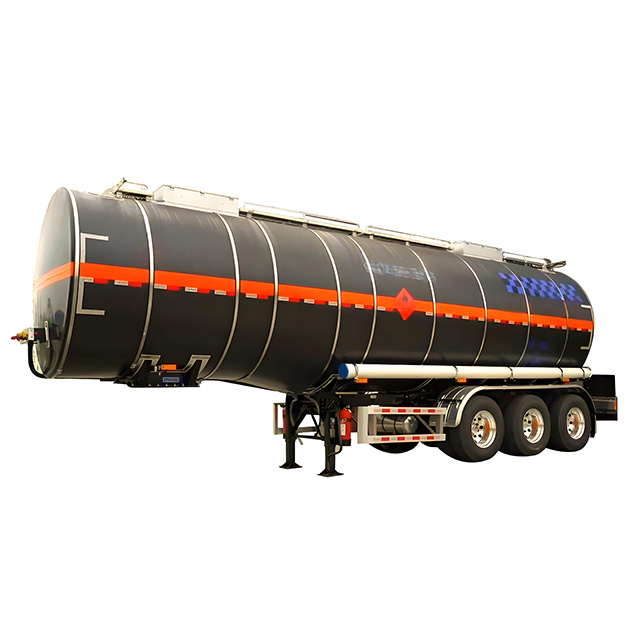
You must choose the right heating method for your operation. Direct fire systems use diesel burners firing into U-shaped tubes inside the tank. They offer rapid heating capabilities. However, they carry the risk of localized overheating and asphalt degradation near the burner tubes. If the asphalt cokes on the tubes, it acts as an insulator, reducing heating efficiency and eventually burning out the tube. Thermal oil heating systems provide uniform heat distribution. They circulate hot oil through coils inside the tank. They lower the risk of coking and protect the bitumen quality. You must weigh this against the added mechanical complexity and weight of the thermal fluid pump, expansion tank, and piping network.
Burner specifications must match the extreme cold. Standard burners fail to ignite at -30°C. Modified burners with pre-heaters are required for low temperatures. Fuel supply winterization is critical. A reliable diesel heating system needs heated fuel lines and heated water separators. Use winter-blend diesel to prevent fuel gelling. Automated thermostatic controls are necessary. They maintain precise temperature bands without requiring constant driver intervention. Set the thermostat to activate at 150°C and shut off at 165°C. This prevents unnecessary fuel consumption while ensuring the load remains pumpable.
Drivers face strict rest cycle regulations. You must power the burner, thermal oil pumps, and automated controls when the truck tractor engine is turned off. Integrated diesel generator sets and auxiliary power units solve this problem. These units must be specifically winterized. Use battery warming blankets and low-viscosity engine oil (0W-40) to ensure they start in extreme cold. Mount the APU in a heated, insulated enclosure on the trailer chassis. This protects it from road spray and freezing winds. A reliable APU guarantees continuous bitumen temperature control regardless of the tractor's status.
Discharge valves, gravity-drain pipes, and external pumps cool the fastest. They hang below the insulated tank and take the full force of freezing wind. They are your weakest links. Evaluate solutions like steam jackets, thermal oil tracing, and heavy-duty insulated valve boxes. A heated valve box encloses the entire discharge manifold. You route exhaust gas from the burner or thermal oil lines through this box. You must establish a strict operational protocol. Always pre-heat discharge piping for at least 30 minutes prior to hookup and unloading. This melts any residual asphalt from previous loads and prevents instant blockages when the main valve opens.
Develop a technical inspection checklist for cold-weather transport operations. Drivers must follow it rigorously before every dispatch.
Check antifreeze levels, glycol-water ratios, and radiator integrity of auxiliary heating engines.
Inspect heating system hoses for micro-cracks caused by thermal cycling.
Verify burner ignition spark electrodes function correctly under sub-zero conditions.
Test all automated thermostatic control sensors using a calibration tool.
Drain water from pneumatic air tanks to prevent ice blockages in the brake and valve lines.
Moisture freezing in air lines controlling pneumatic discharge valves is a major risk. If the air line freezes, the valve will not open. You must implement mitigation strategies. Upgrade to high-capacity air dryers on the tractor. Install alcohol evaporators in the trailer's air system to lower the freezing point of any condensation. Use cold-rated hydraulic fluids (ISO 15 or 22) for all pump drives to ensure smooth operation. Standard hydraulic fluid turns to sludge at -30°C, which will shear the pump drive shaft upon engagement.
Map specific trailer features directly to operational outcomes. This ensures you buy exactly what you need for a Russian winter asphalt tanker. Do not pay for features that do not directly improve cold-weather survivability.
Trailer Feature | Operational Outcome |
|---|---|
150mm High-Density Rock Wool | Safe 48-hour transport at -40°C ambient temperature. |
Thermal Oil Heating Circuit | Zero localized coking and minimal asphalt degradation. |
Heated, Insulated Valve Box | Zero discharge blockages during unloading operations. |
Independent Winterized APU | Continuous heating during mandatory driver rest periods. |
Multi-Point Temperature Sensors | Accurate detection of thermal stratification and crusting. |
Address road weight regulations carefully. Heavy insulation, dual heating burners, and auxiliary systems add significant weight. A fully winterized trailer can weigh 2,000 kg more than a standard unit. This impacts your maximum payload capacities. You must calculate axle loads to avoid fines. Evaluate ADR compliance for hazardous materials transport. Ensure your heating system includes safety mechanisms. Automatic flame-out protection and over-temperature shut-off valves are mandatory for safe operation. If the burner flame extinguishes, the system must cut the fuel supply instantly to prevent pooling and explosion risks.
IoT telematics play a crucial role in modern logistics. Real-time, multi-point temperature monitoring is essential. Dispatchers and fleet managers must access this data continuously. Outline alarm systems that alert dispatch immediately if temperatures drop below 140°C. This allows for proactive intervention before the load solidifies. If the APU fails, the telematics system sends a fault code to the maintenance team. They can guide the driver through manual overrides or dispatch a repair truck before the asphalt freezes solid.
To guarantee operational success in extreme cold, take these immediate actions:
Audit your current fleet's insulation thickness and upgrade units falling below the 150mm threshold.
Install independent auxiliary power units to ensure continuous heating during transit and rest periods.
Implement strict pre-trip inspection protocols focusing on valve heating jackets and fuel line winterization.
Integrate multi-point IoT temperature sensors to monitor thermal stratification in real-time.
A: For extreme cold environments dropping below -30°C, a minimum of 150mm high-density rock wool or equivalent insulation is required to maintain internal temperatures effectively and prevent rapid heat loss.
A: They fail because of thermal stratification. The core remains hot while the edges and bottom cool rapidly. A single sensor often reads the hot core, masking the dangerous cooling at the tank boundaries.
A: Thermal oil systems circulate heated fluid through a network of pipes. This provides uniform heat distribution, eliminating the hot spots and localized coking associated with direct-fire burner tubes.
A: The biggest risk is frozen discharge valves and pipes. These components are exposed and cool fastest. If not pre-heated, the asphalt will solidify instantly, blocking the flow and damaging pumps.
A: Fleets use winterized Auxiliary Power Units (APUs) or independent diesel generator sets. These provide autonomous power to the burners and pumps while the main tractor engine is turned off.


