Tel: +86-183-6396-1712 E-mail: bruce@luckywaycn.com
English

Views: 0 Author: Site Editor Publish Time: 2026-07-12 Origin: Site


Transporting highly corrosive chemicals presents a high-stakes reality where material failure does not just cause downtime; it results in catastrophic environmental, financial, and safety liabilities. Operating in Central Asia introduces unique challenges. Extreme temperature fluctuations from harsh winters to blistering summers and rugged cross-border transport routes accelerate material fatigue and exacerbate corrosion risks. Mitigating these risks requires precise alignment between the specific concentration of the acid being hauled and the metallurgical and structural properties of the equipment.
Specifying the correct manufacturing materials for a sulfuric acid transport trailer is the most critical step in ensuring safe logistics. This guide provides a technical framework for evaluating and specifying the exact metals, linings, and reinforcements required to withstand both the chemical aggression of the payload and the physical demands of regional transport networks.
Concentration Dictates Metallurgy: 98% concentrated sulfuric acid behaves differently than dilute sulfuric acid, fundamentally altering whether carbon steel or a specialty stainless steel acid tanker is required.
Structural Integrity is Non-Negotiable: Beyond the base material, survival on Central Asian routes requires specific structural reinforcements, such as minimum 5mm shell thickness and multi-ring external bracing.
Multi-Layer Linings Prevent Dual-Acid Corrosion: For versatile operations handling both dilute sulfuric acid and dilute hydrochloric acid, multi-layer designs combining stainless steel or aluminum outer shells with PE/PTFE inner linings offer the highest safety margins.
Sulfuric acid is not a uniform variable in logistics. Its corrosivity curve changes drastically based on water content, meaning the chosen chemical tanker materials must be matched perfectly to the exact concentration level of the intended cargo. You cannot simply order a generic tank and expect it to survive the harsh realities of industrial chemical transport.
Highly concentrated sulfuric acid exhibits a unique characteristic known as passivation. When 98% sulfuric acid comes into contact with specific metals, it reacts to form a thin, protective layer of iron sulfate on the surface. This film acts as a barrier, preventing further chemical attack on the underlying metal. Because of this passivation phenomenon, high-quality carbon steel is often viable and highly preferred for strictly 98% or higher concentrations.
The protective layer ensures the tank remains structurally sound over years of dedicated service, provided the concentration never drops and moisture is kept strictly out of the vessel. Operators must ensure that loading and unloading procedures do not introduce ambient humidity into the tank, as even small amounts of water will dilute the acid locally, breaking down the iron sulfate layer and initiating rapid localized pitting. Desiccant breathers are often installed on the vent lines to strip moisture from the incoming air as the tank is drained.
Furthermore, the specific gravity of 98% sulfuric acid is roughly 1.84, making it nearly twice as heavy as water. This immense density requires the carbon steel shell to be engineered not just for chemical resistance, but for extreme mechanical load-bearing capacity. The structural design must account for the dynamic forces exerted by this heavy liquid during transit, especially on uneven terrain.
Dilute sulfuric acid presents a completely different threat profile. The presence of water prevents the protective passivation layer from forming, allowing the acid to aggressively attack and rapidly dissolve standard carbon steel. Furthermore, dilute sulfuric acid is frequently transported alongside dilute hydrochloric acid in mining and industrial operations. Standard carbon steel fails rapidly under these conditions.
Safely hauling these volatile liquids necessitates multi-layer designs, specialized alloys, or comprehensive internal linings that completely isolate the corrosive liquid from the structural shell. When the concentration drops below 90%, the corrosion rate on carbon steel spikes exponentially. At these lower concentrations, the acid acts as a powerful electrolyte, facilitating rapid galvanic corrosion if dissimilar metals are present in the plumbing or valve systems.
Mining operations in regions like Kazakhstan and Uzbekistan frequently require the transport of various acid concentrations to support heap leaching processes. A fleet restricted to hauling only 98% acid becomes a logistical bottleneck. Therefore, specifying equipment capable of handling dilute concentrations provides significant operational flexibility, allowing dispatchers to route the same trailer for different chemical loads without risking catastrophic structural failure.
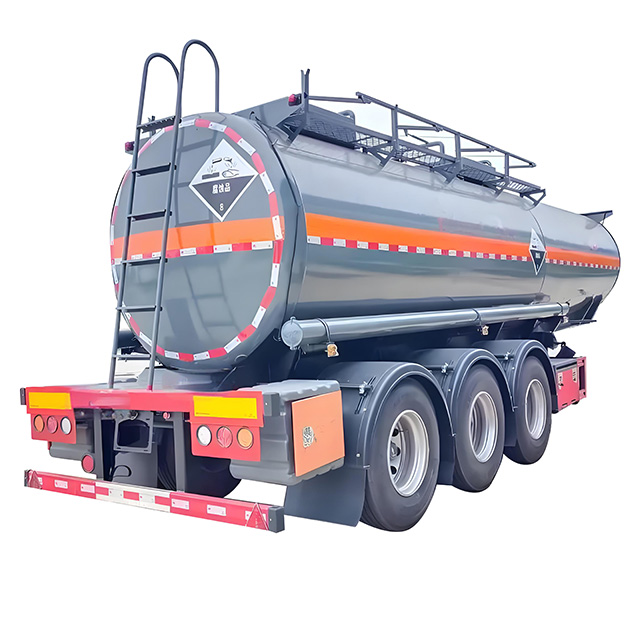
Top-tier manufacturers utilize specific material categories based on the intended chemical payload. Understanding the properties of these materials is essential for specifying a reliable transport vessel that will survive the demanding conditions of cross-border logistics.
Carbon steel, specifically grades like Q235 or Q345, is the industry standard for high-concentration transport under passivated conditions. When hauling 98% sulfuric acid, carbon steel provides excellent tensile strength and durability. However, to account for standard corrosion allowances over the trailer's lifecycle, the steel must meet strict thickness requirements.
A minimum 5mm to 6mm steel thickness is mandatory. This extra material ensures that even if minor, localized corrosion occurs during loading or unloading operations, the structural integrity of the pressure vessel remains uncompromised. The welding process for these carbon steel tanks must be meticulously controlled. Automated submerged arc welding is typically employed to ensure deep, consistent penetration and minimize the heat-affected zone, which can become a focal point for accelerated corrosion if not properly stress-relieved.
The exterior of the carbon steel tank also requires extensive protection against the elements. Central Asian roads are notorious for kicking up gravel and debris, which can chip standard paint and expose the raw steel to rust. High-build epoxy primers followed by durable polyurethane topcoats are necessary to protect the exterior shell from environmental degradation.
For operations requiring versatility, a stainless steel acid tanker offers superior resistance to a broader range of chemical concentrations. Grades such as 304, 316L, and 316Ti are selected based on their specific metallurgical properties. 316L, for instance, contains molybdenum, which significantly enhances resistance to pitting and crevice corrosion in chloride environments.
These tanks are often built to DOT 412 or ADR compliant specifications, designed specifically for high-corrosion, high-density chemical cargo. The ability to haul different chemical loads without cross-contamination provides significant operational flexibility. Stainless steel's smooth, non-porous surface allows for thorough cleaning between loads, preventing dangerous chemical reactions that can occur if incompatible substances mix.
Fabricating a stainless steel tank requires specialized expertise. The welding environment must be strictly controlled to prevent carbon contamination, which can lead to intergranular corrosion. Purging the inside of the tank with inert gas during the welding process is a standard requirement to maintain the corrosion resistance of the weld seams.
Aluminum alloys are highly valued in bulk liquid transport for their weight-saving benefits, allowing for maximum payload optimization. However, aluminum is highly vulnerable to direct contact with strong acids. It cannot be used as the primary containment vessel for sulfuric acid.
Instead, its ideal deployment is as a structural outer jacket or protective cladding in multi-layer insulated tankers. In these configurations, the aluminum provides a lightweight, rust-proof exterior while a specialized inner lining handles the actual chemical containment. This approach is particularly useful when transporting temperature-sensitive chemicals that require insulation, as the aluminum jacket protects the insulation material from moisture and road debris.
When using aluminum as an outer jacket, galvanic isolation is necessary. If the aluminum comes into direct contact with the carbon steel or stainless steel structural components, galvanic corrosion will rapidly degrade the aluminum. Non-conductive barrier tapes or specialized coatings are applied between the dissimilar metals to prevent this reaction.
To handle highly aggressive dilute acids, manufacturers construct composite or multi-layer tanks. An anti-corrosion tank trailer typically features an outer structural shell of carbon steel, stainless steel, or aluminum alloy, paired with an advanced inner lining.
Materials like Linear Low-Density Polyethylene (LLDPE), Polytetrafluoroethylene (PTFE), or vulcanized rubber are rotationally molded or bonded to the interior. This seamless lining prevents the acid from ever reaching the structural metal. This design is the premier choice for mixed-fleet operations handling varying concentrations of dilute sulfuric and hydrochloric acids.
The application of these linings requires rigorous surface preparation. The interior of the steel shell must be abrasive blasted to a specific profile to ensure mechanical adhesion of the lining material. For rotationally molded LLDPE linings, the entire tank is placed in a massive oven and rotated on multiple axes, allowing the molten polymer to coat the interior evenly, creating a thick, seamless barrier that extends through the manholes and valve flanges.
Material Type | Ideal Acid Concentration | Primary Advantage | Key Limitation |
|---|---|---|---|
Carbon Steel (Q235/Q345) | 98% and above | High structural strength, relies on passivation | Fails rapidly with dilute acids or moisture intrusion |
Stainless Steel (316L/316Ti) | Variable (Dilute to Concentrated) | Excellent versatility, easy to clean between loads | Requires strict welding controls to prevent carbon contamination |
Multi-Layer (Steel + PTFE/PE Lining) | Highly Dilute / Mixed Acids | Total isolation of acid from structural metal | Lining can be damaged by mechanical impact or extreme heat |
Material selection must be paired with robust physical engineering to survive the operating environment. The Pamir Highway, rugged steppe routes, and extreme temperature ranges demand specialized structural configurations. A standard highway trailer will literally shake apart on these roads.
A dedicated Central Asia acid tanker requires extensive external reinforcements. Standard practice involves welding 10 or more strengthened steel rings around the exterior of the tank shell. These rings prevent the cylindrical vessel from deforming under the immense stress of heavy liquid surge and punishing, unpaved roads.
Internally, anti-wave baffles or surge plates are critical. Sulfuric acid is exceptionally dense; without internal baffles to disrupt the kinetic energy of the moving liquid, the vehicle would become dangerously unstable during braking or cornering on uneven highways. These baffles must be designed with specific flow-through areas to allow for complete drainage and cleaning, while still providing enough surface area to effectively dampen the liquid surge.
The suspension system supporting this reinforced tank must also be upgraded. Heavy-duty mechanical leaf spring suspensions or reinforced air ride systems with heavy-duty shock absorbers are required to isolate the tank from the constant vibration and impact of washboard dirt roads and potholed asphalt.
Central Asia experiences brutal temperature swings, dropping to -40°C in the winter and soaring above +40°C in the summer. These extremes cause significant thermal expansion and contraction in the tank materials. To prevent micro-fissures and weld failures in extreme cold, manufacturers must utilize automated submerged arc welding.
This process ensures deep, uniform weld penetration that can withstand continuous thermal cycling without cracking. The steel alloys chosen for construction must have verified low-temperature impact toughness. Standard carbon steel can become brittle at -40°C, increasing the risk of catastrophic failure from a minor impact. Specifying steel grades with guaranteed Charpy V-notch impact values at sub-zero temperatures is a mandatory engineering requirement for these regions.
Thermal expansion also affects the internal linings. PTFE and PE linings expand and contract at different rates than the steel shell. The lining application process must account for this differential movement to prevent the lining from delaminating or tearing away from the steel substrate during extreme temperature shifts.
The structural shell is only as strong as its weakest seal. Corrosive liquids will exploit any vulnerability in the discharge system. Specifications must mandate Teflon-lined valves, acid-resistant discharge piping, and hermetically sealed manhole covers.
These components prevent localized corrosion, ensure safe loading and unloading procedures, and eliminate the risk of external spills during transit over rough terrain. Bottom loading and discharge valves must be equipped with emergency shear sections. In the event of a collision or rollover, the shear section is designed to break away cleanly, leaving the internal valve intact and preventing the entire payload from spilling onto the highway.
Manhole covers require specialized gaskets made from Viton or PTFE-encapsulated elastomers. Standard rubber gaskets will degrade rapidly upon contact with sulfuric acid fumes, leading to dangerous vapor leaks. The clamping mechanisms on the manholes must be robust enough to maintain a positive seal even when the tank is subjected to severe twisting forces on uneven ground.
Failing to specify the correct materials leads to severe operational failures. Procurement teams must actively mitigate these risks through strict verification protocols. Relying on verbal assurances from suppliers is a guaranteed path to equipment failure.
Utilizing a dedicated tank for alternative chemicals without verifying material compatibility is highly dangerous. Loading hydrochloric acid into a carbon steel trailer designed strictly for 98% sulfuric acid will strip the passivation layer and cause rapid, catastrophic corrosion.
Operators must strictly adhere to the design limitations of their equipment and ensure lining tolerance before altering cargo types. Even residual amounts of an incompatible chemical left in the tank or piping can trigger violent exothermic reactions when a new product is loaded. Comprehensive wash-out procedures, validated by pH testing of the rinse water, must be enforced before changing chemical payloads.
Clear, permanent labeling on the exterior of the tank indicating the specific materials of construction and the approved chemical payloads is necessary to prevent dispatch errors. Drivers and loading terminal operators must be trained to verify the compatibility of the cargo with the tank's specifications before initiating the loading process.
Procurement teams must rigorously vet manufacturers. Demand comprehensive X-ray weld testing reports to ensure there are no hidden voids in the seams. Verify adherence to international chemical transport standards, such as DOT 412 design equivalents or ADR compliance.
Inspect the Material Test Reports (MTRs) to confirm the exact steel grades and thicknesses used in construction match the required specifications. Physical inspections during the manufacturing process are highly recommended. Sending a qualified third-party inspector to verify the surface preparation before lining application, or to witness the hydrostatic pressure testing of the completed vessel, provides an independent layer of quality assurance.
Request and review all Material Test Reports (MTRs) for the steel plates used in the shell and heads.
Mandate 100% radiographic (X-ray) testing of all longitudinal and circumferential weld seams.
Require a certified hydrostatic pressure test report demonstrating the tank holds pressure without leaks or deformation.
For lined tanks, demand spark testing reports to verify the lining is completely free of pinholes or holidays.
Verify the specifications and chemical compatibility of all valves, gaskets, and discharge piping components.
The choice of material for a sulfuric acid transport vehicle is strictly dictated by the acid's concentration, compatibility with secondary cargo, and the rugged Central Asian operational environment. Carbon steel with a minimum thickness of 5mm and external reinforcement rings is the optimal choice for dedicated 98% concentration routes. Conversely, multi-layer lined tanks or specialty stainless steel are mandatory for dilute or mixed chemical transport.
To ensure safe and compliant operations, take the following actions immediately:
Audit your current chemical transport contracts to identify the exact concentrations and specific gravities of the acids you are hauling.
Define your required payload capacities and route conditions to determine the necessary structural reinforcements and suspension upgrades.
Draft a comprehensive technical specification document detailing the required metallurgy, minimum shell thickness, and valve configurations.
Request detailed welding procedures and quality assurance documentation from all shortlisted trailer manufacturers before issuing a purchase order.
A: It depends on concentration. Carbon steel (5mm-6mm) is optimal and economical for 98% concentrated acid due to passivation, while specialty stainless steel or lined tanks are required for dilute concentrations.
A: Dilute acid contains water, which prevents the passivation layer from forming on carbon steel, leading to rapid corrosion. Stainless steel or non-metallic linings (PTFE/PE) resist this chemical attack.
A: Standard industry practice for safe chemical transport requires a minimum shell thickness of 5mm to 6mm of high-grade steel to provide structural integrity and a corrosion allowance.
A: It is an internal protective barrier (typically rotational molded LLDPE, PTFE, or rubber) that isolates the corrosive liquid from the metal outer shell, enabling the trailer to carry highly corrosive dilute acids.
A: Extreme temperature swings cause thermal expansion and contraction, which can stress welds. This requires high-quality submerged arc welding and physical reinforcement like 10 strengthened steel rings to prevent structural fatigue.
A: Only if the trailer is designed with a compatible multi-layer anti-corrosion lining (like PTFE) or high-grade specialty alloy. Standard carbon steel trailers used for 98% sulfuric acid will quickly fail if loaded with hydrochloric acid. Strict cleaning protocols must be followed to avoid dangerous chemical reactions.


