Tel: +86-183-6396-1712 E-mail: bruce@luckywaycn.com
English

Views: 0 Author: Site Editor Publish Time: 2026-07-06 Origin: Site


Operating heavy transport in South Africa presents a unique intersection of extreme operational demands. Routes frequently transition from unpaved, heavily corrugated mining roads to long-haul highway stretches under intense thermal stress. Standard off-the-shelf bulk transport trailers frequently suffer from premature structural fatigue, inefficient discharge rates, and compliance failures when subjected to these Southern African operational realities. Fleet operators face compounding costs from unexpected downtime, constant maintenance, and trapped payload inside poorly designed vessels.
To achieve viable long-term operational success, procurement teams must move beyond standard specifications. Specifying a custom bulk powder trailer built for longevity and efficiency requires precise engineering choices. This guide details the critical customizations necessary to ensure your fleet withstands regional challenges while maximizing payload and discharge efficiency.
Structural Integrity Over Standard Specs: South African road conditions mandate reinforced chassis designs and heavy-duty suspension systems to prevent weld fracturing and axle failure.
Discharge Efficiency is Altitude-Dependent: A pneumatic discharge tanker must feature compressor and fluidization systems calibrated for regional altitudes and specific material densities (e.g., cement, fly ash, mining dust).
Material Selection Dictates Lifespan: Balancing payload capacity with durability requires specific choices between high-tensile carbon steel, stainless steel, and aluminum, alongside specialized coatings for a corrosion-proof powder tanker.
Regulatory Compliance is Non-Negotiable: Multi-compartment powder tank designs and axle configurations must strictly align with South Africa’s National Road Traffic Act (NRTA) axle load limits.
A successful deployment of a South Africa powder tanker is measured by maximum legal payload, zero cross-contamination, discharge times under 30 minutes, and a minimum 10-year structural lifespan. Achieving these metrics requires acknowledging the specific environmental and topographical challenges of the region. We see standard trailers fail constantly because they ignore the reality of the terrain. You cannot take a trailer designed for smooth European highways and expect it to survive the haul between Johannesburg and the Mpumalanga coalfields.
The transition from smooth national highways to rugged mining access roads introduces severe torsional stress to trailer frames. Corrugations, deep potholes, and uneven off-road environments accelerate metal fatigue. Standard rigid chassis designs often crack under these conditions. A specialized Powder Tanker Trailer must incorporate specific torsional flexibility in the chassis. We achieve this by utilizing reinforced web plates and heavy-duty cross members to absorb continuous shock without fracturing critical welds. When you hit a washout at 60 km/h fully loaded, the chassis needs to flex and return to true, rather than snapping at the kingpin plate.
South Africa’s climate varies drastically, impacting equipment longevity. Coastal humidity in cities like Durban, Cape Town, and Port Elizabeth accelerates rust on tank exteriors and degrades unprotected pneumatic valves. Conversely, the arid, dusty conditions of inland mining regions introduce abrasive wear to external components. These contrasting environments necessitate advanced anti-corrosion treatments. We specify zinc-rich epoxy primers and polyurethane topcoats with a minimum dry film thickness of 120 microns to protect the structural integrity of the vessel over its operational life.
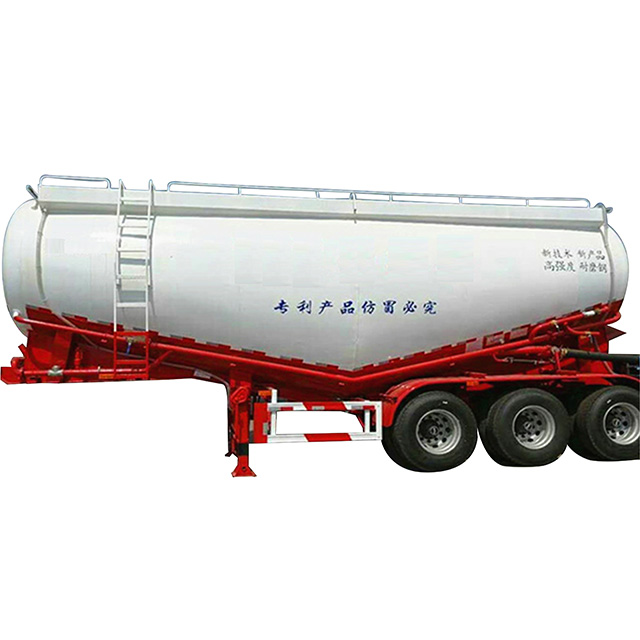
The internal geometry of the tank directly influences both vehicle stability and discharge efficiency. Selecting the correct shape depends entirely on the specific commodities your fleet transports. You need to match the vessel to the material density and the offloading site infrastructure.
V-Type designs feature a single continuous slope toward a central discharge point. They are best suited for standard cement and high-density powders. The primary advantage of the V-Type configuration is its lower center of gravity. This lower profile is necessary for maintaining stability and preventing rollovers on uneven, cambered South African roads. When navigating tight turns on rural routes, that lower center of gravity keeps the trailer planted.
W-Shaped designs incorporate multiple hoppers, making them ideal for lower-density materials. This geometry is often utilized when an operation requires a multi-compartment powder tank. While the trade-off includes a slightly higher center of gravity, the W-shape allows for faster, simultaneous discharge from multiple hoppers. This significantly reduces turnaround times at delivery sites, allowing drivers to complete more loads per shift.
Regardless of the external shape, the internal fluidization system must be optimized to prevent material bridging. Specifying the correct angle of repose—typically greater than 40 degrees for most industrial powders—ensures gravity assists the pneumatic flow. Utilizing high-quality synthetic canvas materials for the fluidization bed ensures even air distribution. We aim for a residual volume of less than 0.3% after discharge. If you leave a ton of cement in the tank after every drop, you are hauling dead weight and losing money on every subsequent trip.
Balancing tare weight, durability, and upfront investment requires a careful evaluation of tank construction materials. Each metal offers distinct advantages depending on the transport application. You cannot afford to guess here; the wrong material will either eat into your payload capacity or fail prematurely from abrasion.
Material Type | Primary Advantages | Operational Limitations | Best Application |
|---|---|---|---|
High-Tensile Carbon Steel (Q345/Q460) | Exceptional durability against abrasives; easier local repair. | Heavier tare weight; requires rigorous anti-corrosion coatings. | Mixed-terrain mining and coarse construction materials. |
Stainless Steel (Grade 304/316L) | Superior chemical resistance; eliminates internal coating degradation. | High initial capital expenditure; requires high-precision welding. | Food-grade dry bulk and corrosive chemical powders. |
Aluminum Alloy (5454/5083) | Significant tare weight reduction; naturally corrosion-resistant. | Prone to cracking on severe off-road routes; requires argon arc welding. | Well-paved, long-haul highway logistics. |
High-tensile carbon steel remains the pragmatic choice for rugged construction routes, provided it is treated to function as a corrosion-proof powder tanker using polyurethane or epoxy primers. Aluminum maximizes legal payload on paved routes, while stainless steel is mandatory for maintaining purity in food-grade or highly corrosive chemical logistics. We frequently see operators try to use aluminum on dirt roads to save weight, only to spend weeks welding cracked seams.
A pneumatic discharge tanker relies heavily on its air system to move heavy bulk materials. Standard European or Asian specifications often fail when introduced to African operational environments. You need a system built for the specific altitude and material you are handling.
Standard compressors lose significant volumetric efficiency at high altitudes, such as the Johannesburg Highveld. To compensate for thinner air, operators must specify oversized, twin-cylinder diesel-driven compressors with at least a 12m³/min capacity. This ensures the system maintains a consistent discharge pressure of 0.2 MPa, preventing pipeline blockages and prolonged offloading times. If your compressor is undersized, your driver will sit at the silo for two hours instead of forty minutes.
Standard mild steel piping degrades rapidly when handling abrasive South African commodities like mining dust or coarse cement. Upgrading to high-wear-resistant stainless steel discharge pipes and reinforced polyurethane butterfly valves extends maintenance intervals. Furthermore, integrating heavy-duty check valves and pressure relief valves is critical to mitigate the risk of tank implosion or dangerous over-pressurization during erratic discharge cycles.
Inspect all butterfly valves weekly for seal degradation.
Blow out the moisture trap on the compressor daily to prevent water from entering the fluidization bed.
Check the pressure relief valve calibration every month to ensure it pops at exactly 0.22 MPa.
Rotate the discharge hoses every quarter to ensure even wear from abrasive materials.
The foundation of any reliable trailer is its running gear. South African road conditions demand components engineered specifically for high impact and heavy lateral loads. Skimping on the suspension is the fastest way to sideline a trailer.
Choosing the right suspension dictates the lifespan of the entire trailer. Heavy-duty mechanical suspension remains the industry standard for reliability in remote areas. This setup requires multi-leaf springs featuring 10 to 12 leaves and thickened hangers to withstand lateral forces on dirt roads. For extreme off-road mining applications, heavy-duty bogie suspension is highly recommended to maximize ground contact and load distribution. While air suspension offers superior ride quality and protects the tank from micro-vibrations, it poses a high implementation risk due to its vulnerability to punctures and the complexity of repairing pneumatic lines in remote locations.
Standard 12-ton axles are insufficient for heavy bulk transport on degraded roads. Specifying 13-ton to 16-ton axles ensures adequate load-bearing capacity. Selecting axles with outboard brake drums allows mechanics to perform brake shoe replacements without removing the hub, drastically reducing maintenance downtime in the workshop.
The structural integrity of the chassis relies entirely on weld quality. Procurement specifications must mandate submerged arc welding for all main beams. Requesting X-ray non-destructive testing (NDT) certificates from the manufacturer guarantees deep weld penetration and absence of internal porosity, preventing catastrophic frame failure under load.
Operational flexibility allows logistics providers to maximize asset utilization. Dividing the vessel into multiple sections transforms a standard trailer into a highly versatile tool for complex delivery routes.
Designing the trailer with 2 to 4 distinct compartments enables the transport of different grades of cement or entirely distinct materials, such as lime and fly ash, in a single trip. This eliminates cross-contamination and allows fleet operators to service multiple clients or sites without returning to the depot for reloading. We use double-sealed internal bulkheads to guarantee zero material mixing between compartments.
Multi-compartment designs require precise engineering regarding compartment placement. The trailer must comply with the South African bridge formula and National Road Traffic Act axle weight regulations even when only partially loaded. Baffle placement and hopper geometry must ensure that material weight remains evenly distributed across the kingpin and rear axles during multi-stop delivery routes. If you empty the rear hopper first, you cannot overload the drive axles of the truck tractor.
Procuring customized heavy equipment involves balancing upfront specifications against long-term operational reliability. You must verify the engineering before the build begins.
Before any steel is cut, the design must undergo rigorous validation. Verifying Finite Element Analysis (FEA) stress-test simulations ensures the chassis can handle dynamic loads. Obtaining custom CAD drawings signed off by experienced mechanical design engineers guarantees the final product will meet SABS (South African Bureau of Standards) compliance. We never accept a generic drawing; we demand to see the exact axle spacing and kingpin load calculations for the specific truck tractor being used.
Importing fully assembled trailers from global manufacturers can lead to parts unavailability if proprietary components are used. To mitigate this risk, specify universally available running gear components. Request comprehensive maintenance schematics prior to purchase and verify that the manufacturer has an established, verifiable track record of supplying equipment specifically tailored for the African market. If you cannot buy a replacement brake booster or suspension bush in a local parts store, do not spec it on the trailer.
Audit your primary transport routes to determine the exact ratio of highway to off-road travel, dictating your suspension and chassis requirements.
Calculate your exact payload density to select the correct tank geometry and material thickness.
Demand custom CAD drawings, FEA simulation reports, and NDT welding certifications from the manufacturer before signing any procurement contracts.
Specify universally available running gear components to ensure local parts availability and minimize maintenance downtime.
A: High-tensile carbon steel (such as Q345 or Q460) is the most effective material for abrasive powders. It offers superior wear resistance compared to aluminum and is easier to repair locally if structural damage occurs on rough mining roads.
A: Inland regions like the Johannesburg Highveld sit at high altitudes where the air is thinner. Standard compressors lose volumetric efficiency in these conditions, resulting in low discharge pressure. Oversized, twin-cylinder compressors are required to maintain adequate flow.
A: Yes. A properly designed multi-compartment tank uses internal bulkheads to separate chambers, allowing you to transport different materials like cement and fly ash in a single trip without any risk of cross-contamination.
A: While air suspension protects the tank from vibrations, it is generally not recommended for severe off-road routes. The airbags and pneumatic lines are vulnerable to punctures from debris, and repairs are complex in remote areas. Heavy-duty mechanical suspension is preferred.
A: Specify a reinforced chassis design and mandate submerged arc welding for all main beams. Always request X-ray non-destructive testing (NDT) certificates from the manufacturer to verify weld penetration and structural integrity before taking delivery.


