Tel: +86-183-6396-1712 E-mail: bruce@luckywaycn.com
English

Views: 0 Author: Site Editor Publish Time: 2026-01-29 Origin: Site


Quick answer: yes, there is demand for a food-grade Powder Tanker Trailer in Southeast Asia.
It is real demand. It also varies by country and commodity.
We see it rise when plants scale up. We see it rise when bulk silos appear.
It grows faster near ports and industrial corridors. It slows in fragmented island routes.
What “demand” means in real purchasing terms
New factories request bulk delivery lanes.
Old fleets shift from bag handling to pneumatic unloading.
Processors ask for dedicated food-grade equipment.
3PL fleets add trailers to win long-term contracts.
Fast demand signals you can check in one day
| Signal | What you look for | Why it matters for Powder Tanker Trailer | Buyer type |
|---|---|---|---|
| Silo installs | Food plants adding bulk silos | Bulk lanes become possible | Processors |
| Port-to-plant powder flows | Regular powder imports or inter-SEA trade | Stable routes suit tank semi-trailers | Importers / Distributors |
| Labor pressure | Bag unloading causes delays | Bulk saves time and labor | Plant ops teams |
| Food safety audits | Stricter hygiene documents requested | Food-grade design gets priority | Multinational buyers |
SEA demand scorecard for food-grade Powder Tanker Trailer
It is a practical snapshot. It helps you prioritize sales focus.
| Country | Demand level | Typical powder lanes | Why demand shows up |
|---|---|---|---|
| Indonesia | High | Port → processors, mill → bakery plants | Big consumption base, growing processing |
| Vietnam | High | Port → food factories, industrial parks | Fast processing growth, import reliance |
| Thailand | Medium to High | Mill clusters → food manufacturers | Strong food export base, audit culture |
| Philippines | Medium | Port → hubs, then regional deliveries | Imports matter, geography complicates bulk |
| Malaysia / Singapore | Medium | Cross-border lanes, hub distribution | Trade hub effect, organized logistics |
| Cambodia / Laos / Myanmar | Emerging | Single-customer contracts | Smaller volumes, fewer silos |
What is a food-grade Powder Tanker Trailer?
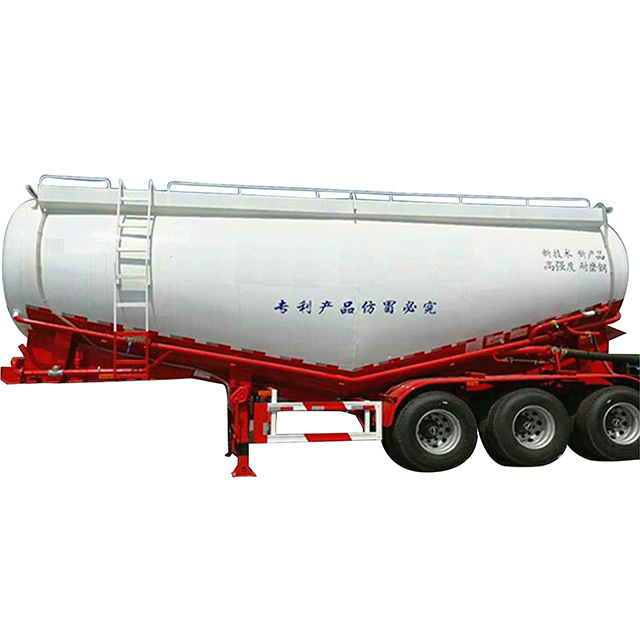
It is a powder tank semi-trailer for hygienic bulk powders.
It uses pneumatic discharge. Air moves powder into a silo.
They use it for flour, starch, sugar, milk powder, additives.
Why food-grade is not the same as cement grade
Food powders punish small design mistakes. Residue becomes a contamination risk.
So it needs clean interior surfaces. It also needs tight seals.
Food-grade vs industrial powder tankers
| Item | Food-grade Powder Tanker Trailer | Cement / industrial powder tanker | What buyers care about |
|---|---|---|---|
| Contact surface | Stainless contact areas, smooth finish | Carbon steel common | Cleaning speed, residue risk |
| Seals and gaskets | Food-safe seals, dust-tight design | Basic seals may pass | Leak control, hygiene audits |
| Manways and cleanouts | Easy access, fewer dead zones | Access focuses on service only | Fast inspection, faster turnover |
| Documentation | Material certs, cleaning records | Minimal food documentation | Procurement approval speed |
| Typical cargo | Flour, milk powder, starch, sugar | Cement, fly ash, minerals | Cross-contamination avoidance |
When a Powder Tanker Trailer is a bad fit
Sticky powders causing bridging in cones.
Very hygroscopic powders lacking moisture control.
Multi-drop retail deliveries, many small receivers.
Why demand grows in Southeast Asia
Processing plants get bigger. Their inbound ingredients centralize.
Bulk delivery becomes easier. It also becomes cheaper per ton.
They move powder from ports to factories. They also move it between plants.
Macro drivers you can explain simply
More packaged food consumption, more ingredient volume.
More imported powders, more port-to-plant trucking.
Labor pressure pushes bulk handling upgrades.
Food safety audits push dedicated clean fleets.
Industrial parks add predictable logistics lanes.
Why bag-to-bulk conversion happens
Bags create dust, waste, and unloading delays. Bulk reduces handling steps.
Plants like stable quality. Bulk lots help control batch variation.
Bagged vs bulk: what changes operationally
| Area | Bagged supply | Bulk supply via Powder Tanker Trailer | What it improves |
|---|---|---|---|
| Unloading time | Slow, manual steps | Faster pneumatic discharge | Dock utilization |
| Labor | Heavy labor needs | Smaller crew, trained operator | Consistency |
| Dust loss | Higher dust exposure | Closed transfer into silos | Cleanliness |
| Traceability | Many small lots | Fewer bulk lots | Quality control |
Who buys or hires a Powder Tanker Trailer in Southeast Asia?
It comes from processors, ingredient traders, and logistics fleets.
They want lower handling costs. They also want reliable quality.
Sector 1: bakery and flour milling
Flour mills feed industrial bakeries and snack factories.
High volume routes suit pneumatic bulk discharge.
Dust control becomes a daily priority.
Sector 2: dairy and nutrition powders
Milk powder and whey often arrive via ports.
They need dry handling. They need odor control.
Dedicated trailers reduce allergen cross-risk.
Sector 3: starch, sugar, cocoa, beverage powders
They move in frequent cycles, often predictable lanes.
Flow behavior varies. Some need better fluidizing design.
Sector 4: additives and premix
Smaller volumes, still high value.
Audit requirements tend to be strict.
Powder traits vs trailer features buyers mention often
| Powder trait | Common examples | Risk in transport | Trailer feature buyers ask for |
|---|---|---|---|
| Moisture sensitive | Milk powder, whey | Caking, odor pickup | Dry air path, tight seals |
| Dusty | Flour, starch | Loss, cleanup time | Closed discharge, good filtration |
| Bridging prone | Cocoa blends, fine sugars | Slow discharge | Good cone geometry, fluidizing support |
| Allergen concern | Dairy powders, some premixes | Cross-contact | Dedicated use plan, cleaning proof |
Country snapshot: where demand usually starts first
Start near large ports. Then follow industrial parks and food clusters.
It is not only population. It is route predictability.
Indonesia
Large consumer base supports high ingredient turnover.
Port-to-plant lanes suit bulk powder transport.
Inter-island logistics can limit bulk adoption.
Vietnam
Industrial parks keep routes consistent and repeatable.
Import powders feed local processing and repacking.
Audit pressure increases demand for food-grade specs.
Thailand
Strong food manufacturing base supports stable bulk lanes.
Export-oriented plants prefer documented hygiene routines.
Flour and starch lanes often drive early demand.
Philippines
Powder imports create hub delivery needs near ports.
Island geography pushes hybrid models, bulk plus bags.
Single-customer lanes often work best for bulk.
Malaysia and Singapore
They act as trade and logistics hubs.
Cross-border lanes add steady utilization for fleets.
Procurement teams often request cleaner documentation.
Cambodia, Laos, Myanmar, Brunei
Demand is emerging. Volumes remain smaller.
One strong contract can justify a small fleet.
SEA snapshot table: what moves, where it usually goes
| Country | Common food powder flows | Typical receiving sites | What makes bulk viable |
|---|---|---|---|
| Indonesia | Flour, starch, dairy powders | Large processors, mills | Silos plus steady port lanes |
| Vietnam | Dairy powders, baking ingredients | Industrial zone factories | Repeatable routes, audit requirements |
| Thailand | Starch, flour, beverage powders | Food export plants | High utilization, strong QC culture |
| Philippines | Dairy powders, flour blends | Hubs, regional plants | Hub concentration near ports |
| Malaysia / Singapore | Mixed ingredients, re-export flows | Distribution hubs | Cross-border freight density |
How do we estimate real demand for a Powder Tanker Trailer?
We do not guess from headlines. We track signals. We confirm lanes.
Demand is real when someone has powder volume, silos, and repeat routes.
So we use a simple framework. It works for buyers and sellers.
Six demand indicators you can check fast
Silos exist: bulk receiving silos at the plant site.
Powder volume is stable: weekly or monthly inbound schedules.
Routes are repeatable: port-to-plant, mill-to-plant, hub-to-factory.
Bag pain is real: labor shortages, dust cleanup, unloading delays.
Food audits matter: buyers ask for cleaning records and material proof.
Unloading infrastructure exists: air supply, filtration, silo adapters.
Quick scoring tool
Score each indicator from 0 to 2. Add them up. It keeps decisions simple.
| Indicator | 0 points | 1 point | 2 points |
|---|---|---|---|
| Silos | No silos | One small silo | Multiple bulk silos |
| Powder volume | Occasional | Seasonal | Continuous |
| Route stability | Many small drops | Mixed drops | Point-to-point |
| Bag pain | No delays | Sometimes slow | Constant bottleneck |
| Audit pressure | Low | Medium | High, frequent audits |
| Unloading readiness | No equipment | Partial equipment | Full pneumatic interface |
How to read the score
0–4: demand likely low. Bags may still dominate.
5–8: demand is possible. One dedicated lane can work.
9–12: demand is strong. Powder Tanker Trailer becomes a clear option.
Bagged vs bulk: the cost questions people forget
We usually compare freight cost only. We should compare total handling cost.
Bags add labor, dust loss, disposal, and unloading time.
Bulk adds equipment cost, training, and cleaning process.
So we compare total cost per ton. We also compare time.
| Cost bucket | Bagged powders | Bulk powders via Powder Tanker Trailer | What changes |
|---|---|---|---|
| Labor | High, manual unload | Lower, trained operator | Fewer hands per ton |
| Unloading time | Long, queue risk | Shorter, scheduled | Better dock planning |
| Dust and loss | Higher loss | Lower loss | Cleaner operations |
| Packaging waste | Bag disposal cost | Minimal | Less trash handling |
| Infrastructure | Low requirement | Silos, adapters, filtration | Capex at receiver |
What do buyers ask first?
They ask about powders, routes, and compliance. Then they ask about uptime.
We should answer those early. It speeds up procurement.
Route and cargo questions
Which powders will you carry today. Which ones later.
Point-to-point lanes or multi-drop lanes.
Typical distance per trip and weekly frequency.
Port loading or factory loading.
Food-grade compliance questions
Contact material grade and certificates.
Cleaning method and cleaning documentation.
Allergen control plan and dedicated use policy.
Seal design, dust control, and residue prevention.
Operations questions
How fast it unloads into a silo.
Which air system it uses, blower or compressor.
Filter system and air cleanliness plan.
Spare parts, training, and service response time.
| Buyer question | What they worry about | Best short answer style |
|---|---|---|
| Can one trailer carry multiple powders? | Cross-contamination | “Yes, if cleaning and dedication rules fit.” |
| How do we prove food-grade? | Audit approval | “We provide material certs and cleaning SOP templates.” |
| How fast does it unload? | Plant throughput | “It depends on powder and silo height; we size the air system.” |
| What about humidity? | Caking and clogs | “We focus on sealing and discharge design.” |
Food-grade Powder Tanker Trailer specs people should check
Specs decide cleaning speed. They decide residue risk. They decide uptime.
So we use a checklist. It keeps procurement focused.
Tank and contact surfaces
Food-contact stainless option. Common choices include 304 or 316.
Smoother interior finish for easier cleaning and less residue.
Geometry to reduce dead zones and product hang-up.
Seals, valves, and sanitation
Dust-tight manways and inspection ports.
Food-safe gaskets and wear parts.
Outlet design to reduce powder build-up.
Cleanout access for faster turnaround.
Pneumatic system
Air system sizing for your powder and silo height.
Filtration to keep conveying air clean.
Pressure relief and safe operating limits.
Standard hose connections and adapters for local sites.
Chassis and running gear for SEA roads
Axle configuration to match local payload rules.
Suspension choices for mixed road quality.
Corrosion protection for coastal routes.
| Spec area | Why it matters | Best for | Common mistake |
|---|---|---|---|
| Interior finish | Residue and cleaning speed | Milk powder, allergens | Rough surfaces trapping powder |
| Seal quality | Humidity protection | SEA rainy seasons | Dust leaks and moisture entry |
| Air system sizing | Unloading reliability | Long hoses, high silos | Underpowered discharge |
| Axles and suspension | Legal payload and stability | Mixed roads, long routes | Over-spec volume beyond payload limits |
Common mistakes we see often
They are avoidable. They cost money when ignored.
Buying a cement-style tanker and calling it “food-grade”.
Ignoring humidity and powder caking behavior.
Skipping silo interface checks, hoses, couplings, adapters.
Over-sizing tank volume beyond axle rules.
Skipping operator training and cleaning procedures.
Quick prevention checklist
Confirm the powder list and future powders.
Confirm silo connections and hose length needs.
Confirm cleaning SOP and documentation needs.
Confirm payload rules and route road limits.
Train operators before first delivery.
Where buyers source a Powder Tanker Trailer
They choose new units, used units, or conversions. Each option has tradeoffs.
New
Cleaner history, easier audit approval.
Better spec fit for food powders.
Higher upfront cost.
Used
Lower cost, faster availability sometimes.
Higher risk of unknown prior loads and residue.
Harder to prove food-grade history.
Convert
Works for fleets upgrading gradually.
Still needs strict inspection and design changes.
May not meet audit needs if history is unclear.
| Option | Best for | Main risk | What to check |
|---|---|---|---|
| New | Food audits, dedicated lanes | Lead time | Spec match, warranty, docs |
| Used | Low audit pressure routes | Contamination history | Prior cargo proof, interior inspection |
| Convert | Fleet transition plans | Hidden dead zones | Sanitary design, seal upgrades |
So, is there demand for food-grade Powder Tanker Trailer in Southeast Asia?
Yes, when the lane is stable and the receiver has silos.
Yes, when audits require documented hygiene.
Yes, when bag handling becomes a bottleneck.
High-demand fit scenarios
Large processors, single-destination routes, bulk silos installed.
Port-to-plant powder flows on repeat schedules.
3PL fleets bidding on multi-year food contracts.
Medium-demand fit scenarios
Regional distributors serving a few large plants.
Hybrid systems using bulk for high-volume powders.
Low-demand fit scenarios
Many small customers, no silos, many drop points.
Highly variable powders needing special handling each trip.
| Scenario | Demand level | Why | Next step |
|---|---|---|---|
| Port → large processor, silo receiving | High | Repeat routes, bulk-ready | Size tank and air system |
| Distributor → multiple plants | Medium | Mixed lanes | Decide dedicated vs multi-commodity |
| Many small drops, no silos | Low | Bulk unloading impossible | Stay bagged or build hub strategy |
FAQ
What is a food-grade Powder Tanker Trailer?
It is a pneumatic powder tank semi-trailer built for hygienic bulk powders.
Is it suitable for flour in humid climates?
Yes, if seals and discharge design fit. Humidity control matters.
How do we prevent contamination between loads?
We use dedicated loads where needed. We follow cleaning SOP. We keep records.
What stainless steel grade is best?
Many choose 304 for food powders. Some choose 316 for stronger corrosion resistance.
How fast can it unload?
It depends on powder flow and silo height. Air system sizing decides most of it.
Blower or compressor?
Both can work. It depends on discharge distance, product type, and site setup.
Can one trailer carry both flour and milk powder?
It can, but audits may require dedicated use. Allergens can complicate it.
Dry clean or wet wash?
Many fleets prefer dry cleaning for powders. Wet wash needs drying control.
What documents prove food-grade?
Material certificates, cleaning records, and QA inspection documents help most.
How do we calculate ROI?
Compare labor, time, loss, and packaging waste. Then add equipment costs.
What should we inspect?
Inspect interior finish, seal quality, valve operation, and pneumatic system performance.
Next step: get a Powder Tanker Trailer spec matched to your lane
Tell us your powder type, route length, silo height, and target payload.
We can recommend tank volume, axle setup, and discharge configuration.
Browse related models and categories here: Powder Tanker Trailer.
Visit www.luckywaycn.com to share your requirements and get a proposal.


